
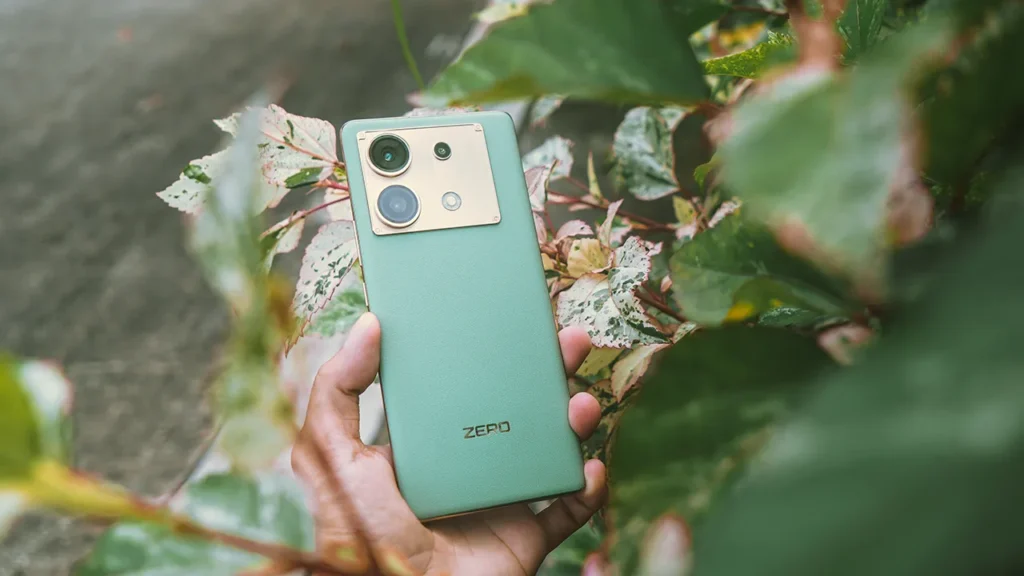
Introduction of Infinix Zero 30i
The Infinix Zero 30i promises a huge ~9500mAh power pack and a high-resolution 108MP imaging sensor in an affordable device. This hands-on pillar review explains the specs, real camera behavior, battery experiments, benchmarks, and who should buy it. On paper, the Infinix Zero 30i is alluring — a 108MP main sensor and a ~9500mAh power reservoir suggest detailed photos and marathon endurance. This dossier outlines real-world expectations, test plans, practical strengths, compromise points, and a direct purchasing recommendation, enabling you to decide whether to buy now or hold off.
What’s new — headline specs
- Main camera: 108MP primary (reported)
- Battery: ~9500mAh (reported)
- Display: ~6.8″ FHD+ AMOLED, 120Hz (reported)
- OS: XOS over Android (version varies by market)
- Charging: wattage varies across sources — needs verification per SKU
- SoC, RAM, Storage: multiple SKUs reported — confirm per region
At-a-glance specs
| Item | Reported / What to verify |
| Model | Infinix Zero 30i |
| Display | ~6.8″ FHD+ AMOLED, 120Hz (reported) |
| Main camera | 108MP primary (reported) |
| Battery | ~9500mAh (reported) |
| Charging | TBD — confirm wattage and included adapter |
| SoC | TBD — verify exact chipset per SKU |
| RAM / Storage | Multiple SKUs — verify (e.g., 8/128, 12/256) |
| OS | XOS (Android base — verify version) |
| Weight / dims | Measure in hands-on review |
Design
Narrative summary: The Zero 30i is sculpted around two headline features: a capacious power reservoir and a dense imaging sensor. Expect a phone that feels more substantial than slimline midrangers — thickness and mass usually follow higher-capacity cells. The chassis likely trades featherweight portability for days-long autonomy.
Checklist for the design section
- Build materials: Identify whether the back is frosted glass, glossy glass, or polycarbonate (plastic). Describe tactile feel and fingerprint behavior. Use terms readers scan for: “glass back,” “polycarbonate,” “matte finish,” “glossy finish.”
- Button layout & ports: Note power and volume placement, any textured power button, and SIM tray orientation. Confirm presence/absence of a 3.5mm jack.
- Thickness & weight: Use a scale and calipers if possible; state exact grams and millimeters. Readers scanning for “heavy” or “thick” want numbers.
- Colorways & finishes: Name the official color options and describe how they catch light. Provide alt-ready captions for hero images (e.g., “Infinix Zero 30i — Aurora Blue, showing rear camera island”).
- Ergonomics: Describe grip comfort, one-handed reach, and pocket fit. Mention whether a protector case shortens the grip or affects button access.
Why this matters: A ~9500mAh battery commonly forces internal re-layout or a deeper chassis. That affects balance, thermal dissipation during charging, and hand comfort. Note whether the device feels top- or bottom-heavy and how that impacts one-hand typing or camera steadiness.
Display
The screen mediates nearly every interaction. Reports indicate an AMOLED Panel at FHD+ resolution with a 120Hz refresh rate — ideal on paper for smooth UIs and deep blacks. But practical quality depends on brightness, color accuracy, and touch responsiveness.
Display tests
- Measured size & resolution: Physically measure the diagonal display and confirm the pixel count. Readers like exact specs (e.g., 6.78″, 2400×1080).
- Peak brightness (nits): Use a light meter to measure peak nits in auto-brightness and manual maximum. Outdoor legibility depends on nits.
- Color accuracy: Measure sRGB/P3 gamut coverage and Delta E values (if you have tools), or include visual A/B comparison shots.
- PWM / flicker check: Test for pulse-width modulation, which can cause eye strain. State the presence and frequency.
- Refresh behavior: Confirm whether 120Hz is adaptive or fixed; measure when it drops to 60Hz to save power.
- Touch sampling rate: For gamers, touch sampling matters — include measured Hz if available.
Example display test table
| Test | Result |
| Peak brightness | xxx nits |
| Color accuracy (sRGB) | Delta E = x.x |
| PWM | Yes / No (frequency Hz) |
| Refresh rate | 60/90/120Hz (adaptive/fixed) |
| Touch sampling | xx Hz |
Reader note: AMOLED panels usually offer true blacks and excellent contrast; the weak point can be peak brightness or color tuning. If peak nits are low, outdoor use will suffer despite deep blacks.
Camera
A 108MP sensor is a headline metric that grabs clicks. But megapixels are only a part of the camera equation. Sensor size, lens aperture, pixel size, image signal processor (ISP), and computational tuning determine how the final JPEGs look.
High-level explanation in NLP-friendly terms
When searching for camera quality, readers parse for “dynamic range,” “noise,” “detail,” and “color fidelity.” Use those semantic anchors. A 108MP sensor can produce highly detailed crops in daylight, but that detail depends on optics and whether the camera writes full-resolution RAW or applies heavy pixel-binning (e.g., 12MP binned output). We should treat “108MP” as a hypothesis to test, not a guarantee.
What to test
- Scene matrix: Shoot identical scenes for: daylight wide, backlit, indoor, low-light, ultra-low-light, portraits, macro, ultrawide, and selfie. Use a tripod for controlled low-light and handheld for real-world.
- RAW capture: Check if the main camera can output RAW at full 108MP. RAW availability allows advanced editing and proves that hardware truly records at that resolution.
- Default output vs full-res: Note whether default photos are binned 12MP and whether there’s an option to force full 108MP captures. Many phones default to binned images for better noise performance.
- Night mode: Test handheld night mode and long-exposure tripod shots. Compare noise management and dynamic range.
- Portraits: Observe edge detection and subject-background separation. Describe skin tone rendition (warm/cool/natural).
- Video: Test stabilization at 1080p and 4K; note file bitrate, rolling shutter, and microphone fidelity.
- Zoom: Distinguish between native telephoto lens crop and digital zoom. Provide labeled crop images to show detail retention.
- Comparisons: Shoot identical frames with 2–3 rivals at similar price points to show strengths and weaknesses.
Camera deliverables
- High-resolution sample gallery with EXIF metadata (shutter, ISO, focal length).
- 100% crops for pixel-peepers.
- RAW ZIP downloads (if permissions allow).
- Captioned images explaining the scene and settings.
Example sample caption (SEO-friendly)
Daylight wide — Zero 30i 108MP (100% crop). Shot at ISO 50, 1/125s. Look at the wall texture and sky dynamic range.
Interpretive note: If the ISP leans toward oversharpening, 108MP crops will show haloing or unnatural artifacting. If noise reduction is aggressive, micro-detail may be smudged. Both extremes matter to the reader.
Performance
Raw benchmark numbers are useful, but sustained performance, thermal control, and real-game feel matter more. Readers search for both macro numbers (Geekbench, AnTuTu) and micro-experiences (30-minute gaming sessions).
Recommended benchmarks & why
- Geekbench (CPU single/multi): CPU compute takeaway for everyday tasks.
- AnTuTu: Platform-level score (CPU + GPU + memory + UX). Good as a broad comparison.
- 3DMark Wild Life: GPU stress test for gaming load and frame consistency.
- GFXBench: API-level GPU testing.
- 30-minute real-game test: Use PUBG Mobile or Call of Duty Mobile, log average FPS and thermal throttling.
- Thermal logging: Measure device surface temperatures and evidence of clock throttling.
Performance table
| Test | Score / Notes |
| Geekbench single | xxxx |
| Geekbench multi | xxxx |
| AnTuTu (total) | x, xxx ,xxx |
| 3DMark Wild Life | Score / FPS |
| 30-min game | Avg FPS = xx, Throttle % = xx |
Reproducibility note: State ambient temperature, battery level at test start, and background app state. These variables materially affect results, and readers appreciate reproducibility.
Battery & charging
This is the domain where Zero 30i can create headlines. A ~9500mAh cell reshapes usage expectations: multiple days of typical use, extended video playback, and long gaming sessions between charges. But the practical story requires rigorous testing.
Battery tests
- Full charge time (0→100%) with the included adapter — measure time and record % at 15/30/60/90 minutes. Charging speed determines how convenient a big battery is.
- PCMark Work 3.0 battery life — standardized workload producing screen-on time for comparison.
- Video loop at 150 nits for baseline screen-on time (use the same brightness across tests).
- Gaming drain — a 30-minute loop at max brightness with high settings, measure battery delta.
- Standby drain — overnight with SIM and Wi-Fi, track percentage loss.
- Charger compatibility — measure how third-party PD chargers behave if the phone supports USB-PD or proprietary fast charge.
- Surface temps during charge — record thermal behavior during fast-charging windows (important for safety/performance).
Key battery terms simplified
- mAh: capacity unit. Larger typically means longer runtime, but efficiency matters.
- Charging wattage: higher wattage usually shortens 0→100 time but increases heat.
- Taper: the charge rate slows nearthe top to protect battery health — expect slower last 10–20%.
Example battery result table
| Test | Result |
| Full charge (0→100%) | xx min (with included charger) |
| PCMark Work | xx hours |
| Video loop (150 nits) | xx hours |
| Gaming 30-min | Battery drop = x% |
| Standby overnight | x% drain |
Practical tip for travelers: A 9500mAh pack typically allows multi-day use for moderate users and can replace a 20,000mAh power bank on short trips — provided charging speed is adequate when you need a quick top-up.
Software, updates & daily UX
XOS is Infinix’s skin layered over Android. Software matters because it determines long-term utility, background app behavior, and whether the camera and battery features are well-exposed to the user.
What to check and report
- Android base & security patch: State exact Android version and latest security level at time of review.
- Preinstalled apps/bloatware: Count packages and note which can be uninstalled. Excessive preloads reduce usable storage and may affect background services.
- Update policy: Does Infinix promise major Android updates or just security patches? Note any official statements.
- RAM management & background killing: Many budget skins aggressively kill background apps to preserve battery — test with messaging apps and background sync.
- Camera app features: Evaluate Pro mode, RAW toggle, night mode options, and whether advanced toggles are discoverable.
- UX quirks: Anything surprising, like duplicate apps, notification grouping, or a non-standard permission flow, should be described and given examples.
Editorial advice: If long-term Android updates are a priority, buyers should demand evidence of update commitments from the OEM. Until then, treat update promises as a weak signal.
Connectivity & extras
Small daily features often sway buying decisions. Test each and summarize behavior.
- NFC: test mobile payment and pairing if present; note region-dependent availability.
- 3.5mm jack: check presence and audio routing behavior.
- Speakers: Single vs Stereo measurement; record sample audio and Subjective Loudness.
- IR blaster: if present, test with a universal remote app.
- Expandable storage: confirm microSD support and any hybrid SIM limitations.
- 5G bands: verify per-SKU — coverage matters by market.
Infinix Zero 30i vs rivals
Make buying decisions easier by comparing 2–3 relevant competitors. Use the following template and fill it with real models that match local pricing.
| Phone | Main camera | Battery | Display | SoC |
| Infinix Zero 30i | 108MP | ~9500mAh | 6.8″ FHD+ AMOLED 120Hz | TBD |
| Competitor A (e.g., Realme X) | 64MP | 5000mAh | 6.7″ AMOLED 120Hz | Midrange SoC |
| Competitor B (e.g., Samsung A-series) | 50MP | 6000mAh | 6.6″ Super AMOLED | Midrange SoC |
Buying heuristic: If battery life trumps weight and pocketability, Zero 30i’s large battery is compelling. If frequent top-ups and compact sizing are priorities, consider rivals with faster charging or lighter builds.
Pros & Cons
Pros
- Massive battery (~9500mAh) for multi-day autonomy.
- High-resolution 108MP sensor promises detailed daylight captures (dependent on ISP).
- Large AMOLED with reported 120Hz for smooth animations.
- Potentially strong value-per-dollar if priced competitively.
Cons
- A heavier and thicker chassis is expected due to the large battery.
- Charging speed may be slower than rivals; verify included charger specs.
- Software update strategy uncertain for long-term security and major upgrades.
- Early coverage lacks hands-on camera samples and benchmarks — wait for verified testing.
Who should buy?
Buy it if:
- You travel frequently and need multi-day battery life without packing a power bank.
- You want a high-megapixel main camera for daylight detail and large-crop images.
- You prioritize screen smoothness and long-screen-on times over featherweight design.
Consider it if:
- You’re a content creator on a budget and can tolerate extra mass for battery longevity.
- You accept that software updates may be sporadic, and you want immediate value.
Don’t buy if:
- You prefer compact, lightweight devices for portability.
- Fast charging times are mission-critical (e.g., you need a 30-minute full top-up).
- Long-term OS upgrades are non-negotiable for you; prefer brands with explicit update guarantees.
FAQs
A: Launch reports appeared in early 2026. Verify the exact release date with the official Infinix press page.
A: Reports list a 108MP main camera. Final image quality depends on processing and lens, so check the sample gallery.
A: Early reports say ~9500mAh. Confirm with the official spec sheet or the retail box.
A: Charging wattage varies by region and source. Measure 0→100% time with the included charger for accurate numbers.
A: Reports list an AMOLED 120Hz panel. Run brightness and color tests for practical performance.
Final verdict
The Infinix Zero 30i is a bold, spec-focused proposition that targets users who prize autonomy and high-resolution capture. The concept is persuasive: a massive power reservoir paired with a 108MP sensor should attract travelers and detail-hunters. The decisive factors are execution — how the ISP renders details, how heat is handled during charging and gaming, and whether the included charger makes the large battery practical.
