
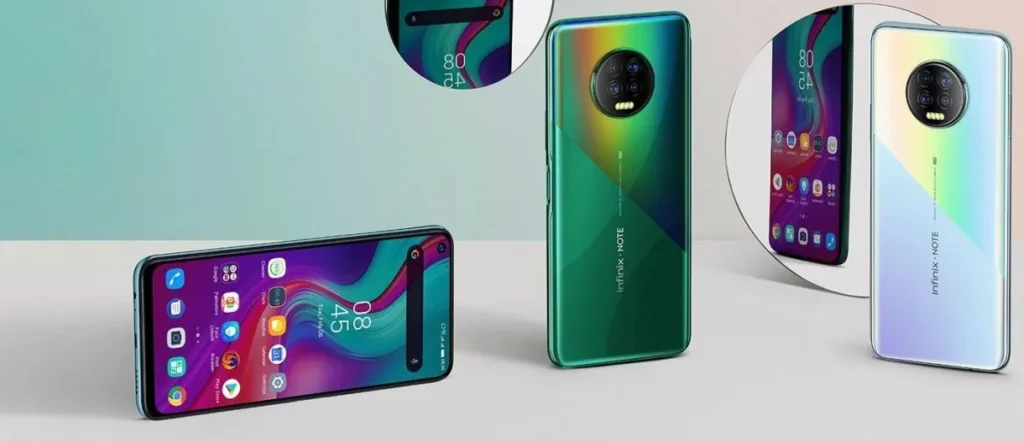
Introduction of Infinix Note 7
The Infinix Note 7 Lite is a budget-focused smartphone aimed at users who want a large display and exceptional battery life for the money. On paper, it offers a 48MP main camera and a 5000 mAh battery — strong selling points in this segment — but the device is not meant to be a speed demon or a premium-screen device. Expect an HD+ panel (so softer text on a large display), a lower-midrange MediaTek Helio G70 chipset for everyday apps and casual gaming, and a package that prioritizes endurance and media consumption over raw power. If you stream lots of video, want long screen-on time, and need decent daylight camera shots on a budget, the Note 7 Lite is worth consideration. If you want sharp FHD screens, sustained high-frame gaming, or the latest camera features, look at newer midrange alternatives.
Key specs at a glance
- Display: ~6.6″ IPS, HD+ (720 × ~1600)
- Chipset: MediaTek Helio G70 (MT6769V/CB)
- GPU: ARM Mali-G52
- RAM / Storage: 4GB RAM; 64/128GB storage; microSD expandable
- Rear cameras: 48MP main + 2MP macro + 2MP depth + QVGA aux
- Front camera: ~8MP (varies by region)
- Battery: 5000 mAh, non-removable
- OS at launch: Android 10 with XOS skin
- Release: 2020 (availability varies by market)
Design & display
Big, plasticky, light for size. Built to save cost and maximize battery life.
What to expect
- The chassis is polymer/plastic with glossy finishes on many colorways. That reduces weight and cost but makes the phone feel less premium.
- The display is large (roughly 6.6″ to 6.95″). Great for watching videos and reading, but because the panel is HD+ and not FHD, pixel density is lower, and text or fine details may appear softer than on competing FHD screens.
- Ergonomically, two-hand use is common. One-handed typing is possible for people with large hands; for others, expect to hold it with two hands.
Practical tips
- Show multiple images: front, back, close-ups of the camera module, box contents, and in-hand shots for scale.
- Add a clear line about pixel density: “HD on 6.6″ results in lower PPI than FHD rivals — expect slightly softer text and less crisp fine detail.”
- Add a usage note for readers: “If you care about the sharpest screen for reading small text, look for an FHD alternative.”
Performance
Helio G70 + 4GB RAM = smooth for daily tasks; not ideal for prolonged heavy gaming or intensive multitasking.
Daily use
- Browsing, social media, streaming video, and messaging run most of the time.
- App switching can slow down when storage is nearly full — keep at least 10–20% free storage for best performance.
- Background apps and heavy multitasking will cause occasional stutters.
Gaming on Infinix
- Expect medium to low settings for heavy titles. Games like PUBG Mobile / BGMI typically run at around 30–40 fps at medium settings on similar hardware, but results vary depending on thermals and background load.
- Casual games (e.g., Candy Crush, Subway Surfers) will run fine.
- Prolonged gaming sessions may produce thermal throttling and reduced fps over time.
Storage & memory tips
- If you plan to install many games or keep large media, choose the 128GB model (if available) or use a microSD for photos and videos.
- Close background apps before playing heavy games.
Practical checklist
- Day test: open 20 apps, switch repeatedly, and note lag or force-close events.
- Gaming test: play a popular graphically heavy game for 20 minutes at medium settings; report average fps and temperature change.
Camera
The 48MP sensor appears promising on spec sheets, but actual results depend on Sensor Size, image processing (ISP), and software tuning. Expect good daylight shots, average low-light performance, and mediocre macro results.
Daylight photos
- The 48MP sensor captures detail in bright light. The phone may use pixel binning to produce 12MP default shots with better noise handling.
- Colors are punchy and social-media friendly (might be slightly oversaturated).
- Tip: Provide 3–5 daylight samples: landscape, person portrait at 2–3m, and a 48MP crop to show the advantage of higher-resolution capture.
Low-light performance
- Low light is a budget phone’s weak spot: expect noise, softer edges, and reduced dynamic range.
- Night mode can help, but it won’t match midrange/flagship phones.
- Test: Shoot the same scene in Auto and Night mode; show 100% crops to highlight differences.
Macro & depth
- The 2MP macro is more for novelty than high-detail close-ups. Expect low-res macro crops with soft detail.
- A depth sensor allows portrait blur, but edge detection can be inconsistent. Use natural backgrounds and give examples of clean and messy edge cases.
Selfies & front camera
- The ~8MP front camera is fine for social posts and video calls. Don’t expect studio-level portrait sharpness or accurate skin tones in challenging lighting.
Camera test plan
- Daylight wide: street at noon.
- Portrait: person at ~2m with background.
- Low light: same scene at night with street lamps; Auto vs Night mode.
- Macro: flower or coin at close range.
- Video: 1080p@30fps walking test — note stabilization and exposure changes.
- Crop test: 48MP mode vs default 12MP mode — show detail retention.
- Label each sample with location, time, and camera mode to increase trust.
Battery life & charging
The 5000 mAh battery is a major strength. For most users, it’s the feature that will matter most.
What to expect
- Mixed use (social apps, video streaming, chat) usually gets you through a full day easily. Light users can often stretch to 1.5–2 days.
- Heavy gaming will drain the battery faster, but still yields relatively long sessions compared to smaller batteries.
Simple battery tests to run
A. Video loop test (standard)
- Screen at 50% brightness, airplane mode, loop a 1080p video Until Shutdown. Record hours and minutes.
B. Web-browsing test
- Scripted browsing at 150 nits until shutdown. Report runtime.
C. Mixed-use day log
- Use the phone normally and log battery at 8 am, 12 pm, 4 pm, 8 pm, and bedtime — include minutes of streaming and gaming.
D. Charging test
- From 0% to 100% with the stock charger: record times at 0→20, 0→50, 0→80, 0→100. Note charger wattage and any fast-charge branding.
Software, updates & security
Launched with Android 10 + XOS. Budget models typically receive fewer major updates and sporadic security patches.
Buyer checklist
- Ask sellers what Android version and patch level are currently installed.
- If frequent security updates or multi-year platform upgrades are a must, consider phones with explicit update promises.
How to check updates on the phone
- Settings → About phone → Android version / Security patch level → System update
Who should (and shouldn’t) buy
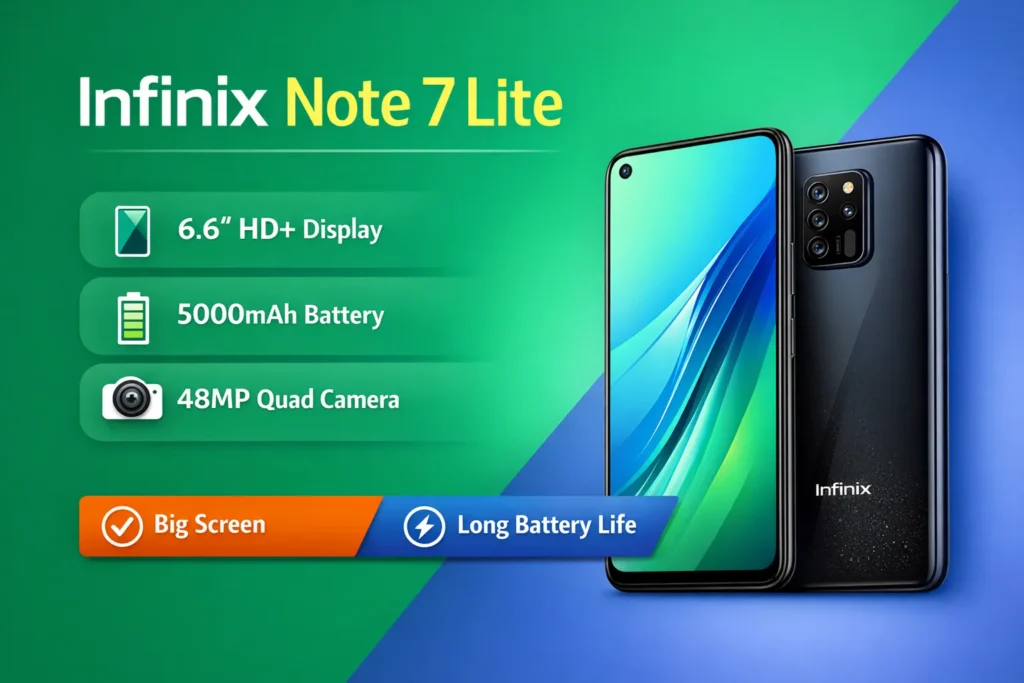
Buy it if:
- Battery life is the top priority.
- You stream movies and want a big display.
- You need a budget phone for social apps and casual gaming.
Don’t buy if:
- You want an ultra-sharp FHD display.
- You need top-tier gaming performance or pro-grade camera photos.
- You require guaranteed frequent OS/security updates.
Price
Local prices change often; show live retailer links and warranty status.
How to structure the price section
- Small table: price by country (update regularly).
- Retailer links with “official warranty” badge if available.
- Short note: “Prices vary — check seller warranty and return policy.”
Pros & Cons
Pros
- 5000 mAh battery — excellent for long use
- 48MP main camera on paper — good daylight images
- Expandable storage via microSD
- Large display for streaming and reading
Cons
- HD resolution on a large screen — lower pixel density
- Midrange chipset — not for heavy gaming or pro apps
- Low-light camera performance is inconsistent
- Software update cadence uncertain
FAQs
A: It’s worth buying only if battery life and a large screen are your top priorities and you’re on a tight budget.
A: The phone commonly ships with the MediaTek Helio G70 chipset.
A: The 5000 mAh battery usually gives a full day or more on mixed use. Real life depends on screen brightness, network, and which apps you use.
A: Yes — most listings show a 3.5mm jack and microSD expansion. Check the retailer page to confirm the package contents.
A: Typical setup: 48MP main + 2MP macro + 2MP depth + QVGA auxiliary; front camera around 8MP.
Conclusion
The Infinix Note 7 Lite proves that a budget smartphone does not have to feel compromised in everyday use. Its biggest strengths are clear and consistent throughout real-world usage: a large, comfortable display for media consumption and a 5000 mAh battery that easily lasts a full day or more for most users. These two features alone make it an appealing choice for students, casual users, and anyone who prioritizes long screen-on time over cutting-edge specifications.
That said, the phone makes understandable trade-offs to hit its price point. The HD+ resolution on a large screen means visuals are not as sharp as FHD competitors. The Helio G70 chipset is designed for daily tasks rather than heavy gaming, and the camera system performs best in good lighting, with low-light photography remaining average. Software updates are also limited compared to newer midrange devices, which is important for buyers planning long-term use.
