
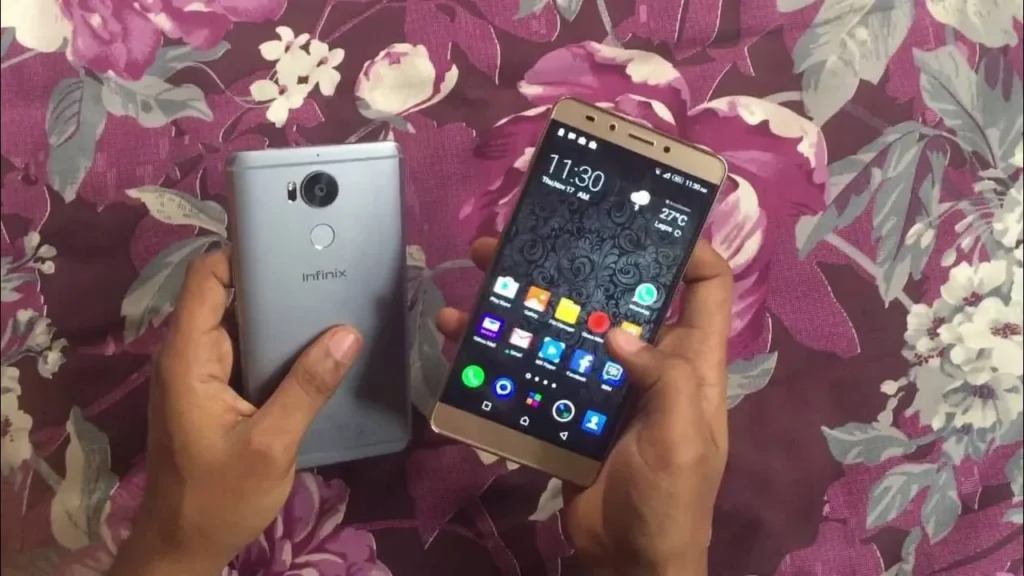
Introduction of Infinix Note 3
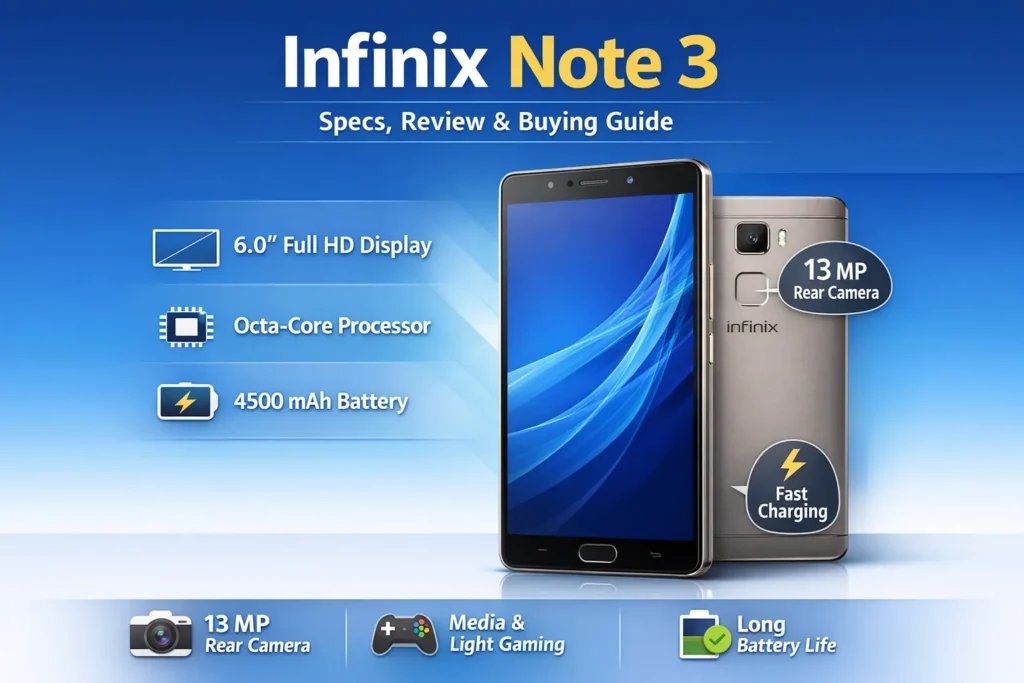
If you want a large-display device with extended battery endurance at a low cost, the Infinix Note 3 is a compelling option. It pairs a 6.0-inch FHD screen with a MediaTek octa-core SoC, 2/3 GB RAM, 16 GB storage, and a 4500 mAh energy reservoir with fast-charge features. Excellent for media, general use, and long call sessions; not a flagship-class choice for sustained 3D gaming or low-light photography.
Quick specs
| Field | Detail |
| Model | Infinix Note 3 (X601; Note 3 Pro variant exists) |
| Launch / Release | Announced 2016; released mid-2016 |
| Display | 6.0-inch Full HD (1080×1920), IPS / LTPS; ~367 ppi |
| SoC | MediaTek MT6753 (1.3 GHz octa-core) |
| RAM / Storage | 2 GB RAM + 16 GB storage (Note 3); Note 3 Pro: 3 GB RAM; microSD support |
| Rear camera | 13 MP, LED dual flash, 1080p video |
| Front camera | 5 MP with LED flash |
| Battery | 4500 mAh non-removable; quick charge with dual charging engines |
| OS / Skin | Android 6.0 Marshmallow with XOS skin (at launch) |
| Fingerprint | Rear-mounted fingerprint scanner |
| Dimensions / Weight | ~162.5 × 82.8 × 8.4 mm; ~199 g |
| Connectivity | Dual SIM, microUSB 2.0, 3.5 mm jack, Wi-Fi 802.11n, BT 4.0, A-GPS |
Design & build
The chassis is the model architecture — it defines the structural priors, inductive biases, and constraints for everything that runs inside.
The Note 3’s external design is straightforward: a wide 6.0-inch front dominated by the viewport, metal-trim edges, and a plastic rear with a metallic paint finish. The weight (~199 g) gives a reassuring, solid feeling — comparable to a model with many parameters that resists flex and drift. The device is wide and long, so one-handed operation is limited: ergonomics trade off with display real estate.
Key implementation notes
- Rear fingerprint scanner sits under the camera — think of it as a biometric token validator for secure unlocking. It’s well-positioned for natural index-finger access.
- Buttons (power, volume) are on the right rail: consistent with many contemporary designs.
- No IP water/dust ingress protection — the chassis lacks an explicit environmental robustness constraint, so avoid submersion.
- Color options: Champagne Gold, Palm Gold, Crystal Gray (naming varies by market).
Editor tips
- If selling a used unit, inspect peripheral seams for wear, inspect the fingerprint sensor ring for rubbing, and check the microUSB port for bent pins.
- Recommend a slim TPU case to preserve the slim profile while adding shock absorption.
Display
Display = sequence length × token resolution. A larger screen gives more tokens in the visual sequence; Full HD provides decent token density (~367 ppi).
The Note 3’s 6.0-inch 1080×1920 IPS panel is the device’s primary selling point. Colors are serviceable for an IPS-class panel, and viewing angles are respectable. Contrast and peak brightness are fine indoors but not class-leading in sunlight.
What it’s optimized for
- Media consumption: video and reading benefit from the large token count (more visible pixels).
- Productivity/reading: large typography and multi-column layout comfort.
Limitations
- Under direct bright sun, the panel lacks peak luminance compared to higher-end displays; consider shade or increasing brightness.
- Not an AMOLED: blacks will be grayer and contrast lower.
Simple test
- Play a 1080p video at maximum brightness; evaluate for Color Wash, contrast, and angular color shift at 45° off-axis.
- Measure subjective sharpness at normal reading distance (33–40 cm) to validate perceived pixel density.
Performance
SoC = inference engine; CPU cores = parallel processing threads; RAM = working memory/context window; storage = long-term memory/dataset.
The MediaTek MT6753 (1.3 GHz octa-core) paired with 2 GB RAM (3 GB in Pro) provides competent household-level throughput. Everyday workloads — browsing, messaging, video playback — are fluid. Heavy parallel tasks, such as complex 3D games or large-scale multitasking, stress the working memory and inference engine, producing frame drops or thermal throttling.
When it performs well
- Web browsing with a handful of tabs, social apps, streaming, and productivity apps.
- Media decoding — 1080p playback is handled cleanly.
When it struggles
- Prolonged, high-fidelity 3D gaming (modern titles) due to limited GPU bandwidth and thermal envelope.
- Large app installs and background multitasking on a 2 GB device — the OS will reclaim memory more frequently.
Benchmarks
- Typical mid-range 2015–2017 SoC class scores. If you need precise numeric scores for a review page, run Geekbench and AnTuTu on the physical unit — results vary by firmware and thermals.
Practical tip
- When writing performance paragraphs, include a real-world frame-rate check for a modern benchmark game (e.g., Asphalt or PUBG Lite at low settings) and an observation about thermal throttling after 20–30 minutes.
Cameras
Camera = sensor + preprocessor; daylight photos = high SNR (clean signal); low-light = low SNR (noisy channel).
The 13 MP rear camera with dual LED flash is serviceable in well-lit conditions: color reproduction is acceptable, and detail levels satisfy social sharing. The 5 MP front camera — with its own LED — is useful for daytime selfies and video calls.
Strengths
- Daylight shots have decent dynamic range for social uploads.
- Dual LED helps for mid-low light and fills faces.
Weaknesses
- Low-light performance shows grain/noise; aggressive noise reduction may soften details.
- Video capabilities are capped at 1080p30 and lack advanced stabilization.
Practical camera checklist
- Capture daylight, indoor, and low-light scenes; compare JPEGs at full resolution.
- Use HDR mode for scenes with high dynamic range (sky + foreground).
- For night photos, stabilize or use flash; consider third-party camera apps that support longer exposures if available.
Battery & charging
Battery = energy budget; fast-charge circuitry = optimizer that reduces time-to-convergence (charge), dual charging engines = parallel optimizer heads for faster gradient steps.
The 4500 mAh battery is one of the Note 3’s marquee features. For most users, this translates to multi-day endurance under light/moderate workloads and reliably full-day use under heavier use. The device also supports a proprietary fast charging method (Infinix’s dual charging engines / PE+ style marketing), which accelerates initial charging rates.
Realistic outcomes
- Mixed daily use (social, browsing, messaging): 1 to 1.5 days; often 2 days with conservative settings.
- Video streaming: several continuous hours; the exact screen-on time depends heavily on brightness levels.
- Heavy gaming: significantly reduces runtime — expect 4–6 hours continuous gaming depending on intensity.
Practical battery tests to include
- Standardized rundown: set display to 200 nits, Wi-Fi on, airplane off; run a scripted mixed workload and measure screen-on time to produce comparable SOT (screen-on time) figures.
- Charging curve: record 0→50%, 50→100% times and note surface temperature at 10-minute intervals.
Marketing claims
- The “five minutes charge gives long talk time” claim is marketing shorthand. Real charging gains vary by cable, charger capability, and ambient temperature.
Software & updates
OS = framework API; skin (XOS) = application-level wrappers and heuristics; updates = version retraining or patch releases.
The device shipped with Android 6.0 Marshmallow under Infinix’s XOS UI. Many units remain on Marshmallow due to the manufacturer update policy and carrier constraints. For writers and buyers in 2026, software stagnation is a real consideration: security patches and feature backports are limited.
What to check
- On a used unit: Settings → About phone → Android version and patch date.
- Community/third-party ROMs: For enthusiasts, custom ROMs may provide newer Android versions, but these come with risks (warranty, stability, hardware feature compatibility).
Connectivity & sensors
- Dual-SIM support (Micro-SIM depending on variant)
- Wi-Fi 802.11 a/b/g/n (Wi-Fi 4)
- Bluetooth 4.0
- GPS with A-GPS
- FM radio, 3.5 mm audio jack, microUSB 2.0
Comparison
| Model | Screen | Battery | RAM | Best for |
| Infinix Note 3 | 6.0″ FHD | 4500 mAh | 2/3 GB | Media & battery life |
| Infinix Hot series (same era) | ~5.5″–5.9″ | 3000–4000 mAh | 2 GB | Compact budget |
| Tecno Camon (budget) | 5.5″–6.0″ | 3000–4000 mAh | 2–4 GB | Camera focus |
| Modern budget (2024+) | 6.5″+ | 5000 mAh | 4–8 GB | Better for gaming & updates |
FAQs
A: The Infinix Note 3 was announced in 2016 and released in mid-2016.
A: It has a 4500 mAh non-removable battery and supports Infinix’s fast-charge implementation using dual charging engines.
A: 6.0-inch Full HD (1080×1920) — delivering sufficient pixel density (~367 ppi) for crisp video and comfortable reading.
A: MediaTek MT6753 octa-core CPU (1.3 GHz), a mid-range SoC from the 2015–2016 era optimized for balanced power and efficiency.
A: Standard models ship with 2 GB RAM + 16 GB storage. The Note 3 Pro variant commonly offers 3 GB RAM. microSD expansion is supported for media.
Final verdict
The Infinix Note 3 is a value phablet optimized for media consumption and long battery life. If you need a large, economical device for video, reading, and long calls, it delivers. Opt for newer phones if you need modern Android updates, 5G, or heavy gaming.
