
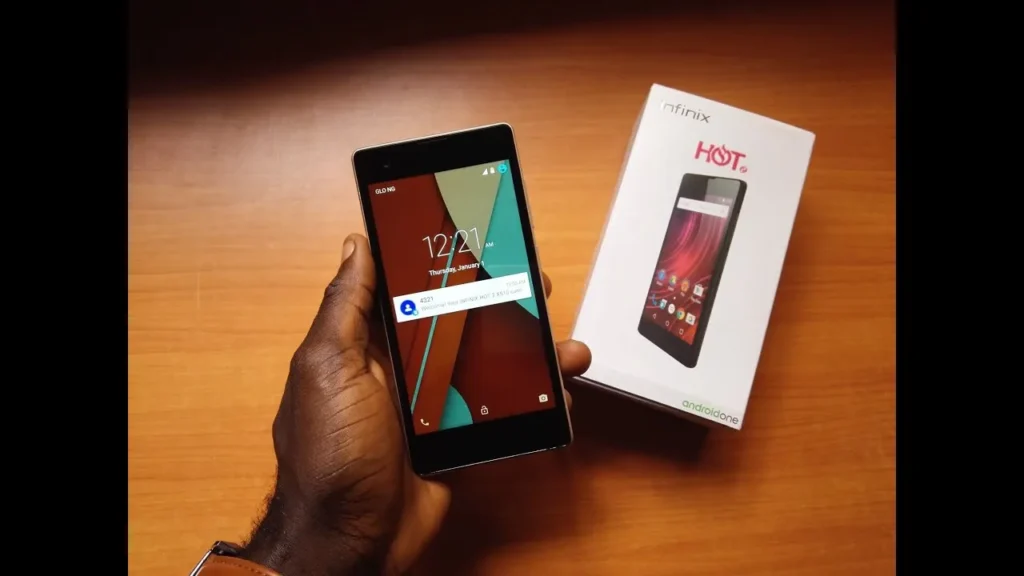
Introduction of Infinix Hot 2
If you want a budget-friendly smartphone with sensible features, the Infinix Hot 2 is a solid option—offering decent everyday performance, good battery life, and value for money. Read this full guide to learn the exact specs to check, how to test the battery and camera, comparisons with rivals, and a clear buying checklist.
What you’ll find in this guide
- Quick verdict & who should buy the Infinix Hot 2
- Easy-to-read specs table (what to verify)
- Design, screen, and build explained
- Performance and benchmarks — what to run & how to interpret results
- Camera tests & sample checklist for reproducible comparisons
- Battery testing protocols and real-world life tips
- Software, updates, and practical support notes
- Price, availability, and best places to buy (editor checklist)
- Competitors and a comparison table editors can paste into the CMS
- Final recommendation, pros & cons, and FAQs (questions preserved exactly)
Quick specs snapshot
| Category | What to collect |
| Name / SKU | Full retail name (Infinix Hot 2) + regional SKUs |
| Launch | Official launch date (YYYY-MM-DD) + launch markets |
| OS | Android version at launch + current firmware build |
| SoC / CPU | Chipset name, CPU cores & max frequency |
| GPU | GPU model (for gaming tests) |
| RAM / Storage | All RAM and storage variants & microSD support |
| Display | Size, resolution, panel type (IPS/TFT/AMOLED), peak nits |
| Cameras | Sensor MP, aperture, stabilization, video max res |
| Battery | Capacity (mAh), charging type, and wattage |
| Connectivity | Bands, 4G/5G support, Wi-Fi version, Bluetooth, NFC |
| Ports | USB type, headphone jack presence |
| Sensors | Fingerprint, accelerometer, gyro, proximity, compass |
| Dimensions & weight | Length × width × depth & grams |
| Colors | Marketed color options |
| Box contents | Charger, cable, case, manual |
| Warranty | Warranty length & region rules |
Design & Build
When readers scan a phone review, they want a short mental model: premium or pragmatic, heavy or featherlight, glossy or matte. Translate build into sensory adjectives and quick heuristics.
Feel and look
Describe the phone in straightforward terms: is it light, solid, or budget plastic? Note finish (matte / glossy), color options, and whether the surface attracts fingerprints. If the back is removable, say so and explain implications for battery replacement or SIM access.
Practical language: “The Infinix Hot 2 uses a polycarbonate shell that keeps weight low and resists minor dents; it’s comfortable for long calls and pocket storage.” Where appropriate, include a short sentence about perceived quality: “doesn’t flex when you hold it,” or “edges feel cheap under pressure.”
Ergonomics
Assess one-handed usability, button placement, and tray design. List whether the volume rocker and power button sit flush, if they rattle, and how reachable they are for users with different hand sizes. State explicitly if the device has a dedicated microSD slot or a hybrid SIM tray—this matters a lot for buyers who want both dual-SIM and expandable storage.
Durability
Does the vendor claim any water or dust resistance? Many budget phones don’t, so be cautious with wording: “No official IP rating; avoid submersion.” For editorial safety, suggest non-destructive durability checks like a light squeeze test and check for flex/gaps; avoid destructive drop tests unless you have lab safety protocols.
Display
A display review should translate objective numbers into user-facing advice. Peak nits, color gamut, and resolution matter, but readers care most about outdoor legibility, watching video, and gaming responsiveness.
What to measure
- Size & resolution: e.g., 6.0″ HD (720×1280) — explain what HD means in practice (pixel density and expected sharpness at typical viewing distances).
- Panel type: IPS vs AMOLED — trade-offs (AMOLED: deeper blacks & power savings on dark themes; IPS: accurate colors & usually cheaper).
- Brightness (peak nits): why it matters outdoors. Give thresholds: ~300 nits acceptable indoors, 450+ nits recommended for comfortable outdoor use.
- Color & contrast: note if tones skew warm/cool or look oversaturated.
- Touch response & refresh rate: mention if the phone supports 90/120Hz; otherwise, note the default 60Hz behavior.
A simple test you can run
- Open a white webpage at maximum brightness and check visibility under direct sunlight.
- Play a 1080p video and look for compression banding or visible artefacts.
- Run a 10–15 minute gaming session to test touch responsiveness and detect ghost touches or lag.
- Capture a macro shot of the screen with another phone to evaluate color reproduction and pixel arrangement, if relevant.
Performance
Performance is a composite of CPU speed, GPU throughput, thermal behavior, and Software Optimization. Benchmarks provide repeatable numbers; real-world tests show how those numbers map to daily use.
What performance means
Performance = how fast apps open, how smooth animations feel, how steady a game’s frame rate is, and how long the phone sustains high loads before throttling.
Benchmarks to collect
- AnTuTu (system score): gives a broad system-level figure including CPU, GPU, memory, and UX.
- Geekbench (single-core & multi-core): isolates CPU performance.
- 3DMark (GPU/gaming stress): useful to compare graphics performance across devices.
Method: Collect screenshots for each run, record the device state (battery %, background apps), and run tests multiple times to show variance.
Real-world tests
- App cold start time: reboot and time how long it takes to open Chrome or another heavy app.
- Multi-tab browsing: open 10 tabs and switch between them to note reloads and RAM management.
- Gaming: run the same game for 10–15 minutes and record average FPS (some games show frame counters; otherwise, use an overlay app if permitted).
Methodology tips
- Reset to default settings before tests.
- Use the same app versions and network conditions.
- To reduce thermal throttling, cool the phone between runs and allow at least 10 minutes between heavy runs.
- If possible, supply ambient temperature and note whether the device becomes uncomfortably warm.
Camera
Camera tests should be reproducible photo-by-photo. The goal is not to exhaustively analyze every computational trick, but to provide consistent, repeatable comparisons.
Camera checklist
- Main sensor MP and aperture
- Secondary lenses (ultrawide / macro/depth)
- Video: max resolution & frame rate (e.g., 1080p@30fps)
- Stabilization: OIS or EIS? Note presence & effectiveness.
- Flash type and color temperature
Photo sample plan
Collect the same set of shots for all devices you compare so readers can judge differences:
- Daylight wide — open scene, texture & detail.
- Backlit / HDR test — sun behind the subject to test the dynamic range.
- Low-light streetlamp — to evaluate noise handling and exposure.
- Portrait/depth mode — human subject, check edge detection and bokeh quality.
- Macro / close-up — texture detail and focus accuracy.
- 1:1 crops — center and edge crops for sharpness proof.
- EXIF data — save originals to provide shutter, ISO, and aperture context.
Battery
Battery reporting must be both repeatable and transparent. Always state the charger used and ambient conditions.
What to gather
- Stated capacity (mAh) and tested capacity estimate
- Charging type and tested charging times (0→50%, 0→100%)
- Battery discharge curve CSV (hourly or every 10% step) — useful for graphs
Lab tests to run
- Video loop test at 200 nits: standardizable and reproducible; record time to shutdown.
- Web browsing script: use automated or manual browsing to measure screen-on time (SOT).
- Mixed usage day: streaming, calls, camera use — report SOT and time-to-empty.
Simple real-world battery checks
- Use the phone from 8:00 AM to midnight and log percent every two hours.
- Note the biggest drains — display, background sync, or gaming.
- Always mention which charger you used (wattage & brand), and whether fast charging is vendor-locked.
Software & Updates
Software is often the difference between a good value phone and a frustrating one. Buyers should know the update cadence and the vendor’s support policy.
Things for the buyer
- Android version shipped, and whether the phone is on an official update path.
- Security patch level and date.
- Manufacturer extras: preinstalled apps (bloatware) vs useful utilities.
- Whether the phone is part of Android One or runs a heavy custom skin.
- Presence of adware or promotional content (be explicit if you find it).
Support checklist
- Link to vendor support/firmware download pages.
- Note how to check for OTA updates.
- If a custom ROM or active developer community exists, mention it with a risk caveat about warranty.
Connectivity, sensors & extras
List cellular bands and variants explicitly—this matters for buyers across regions. Note Wi-Fi standard (a/b/g/n/ac/ax), Bluetooth version, NFC presence, and where the fingerprint sensor is positioned (rear, side, in-display). Mention face unlock reliability and whether biometric options are secure enough for payments.
Price, and buying advice
Price checklist
- Collect current retail price for major regions: USD/GBP/EUR/PKR (include date).
- Link to the official store and 2–3 trusted retailers per region.
- Note the used-market price ranges and give tips for second-hand buyers.
Buying advice
- Buy from official or authorized stores if warranty matters.
- Check IMEI/serial for authenticity.
- Compare total cost (shipping, VAT) and read the return policy carefully.
Competitors & comparison table
Choose 3–5 phones in the same price/performance band. Compare SoC, RAM/Storage, key camera specs, battery, and approximate price. Then give a one-line recommendation for each competitor.
| Model | SoC | RAM/Storage | Camera | Battery | Price (approx) |
| Infinix Hot 2 | (collect) | (collect) | (collect) | (collect) | (collect) |
| Competitor A | Helio/G series | 4/64 | 48MP | 5000 mAh | $XXX |
| Competitor B | Snapdragon/Mediatek | 3/32 | 13MP | 4000 mAh | $XXX |
| Competitor C | Value brand | 4/128 | 50MP | 6000 mAh | $XXX |
One-line picks:
- Infinix Hot 2 — best for buyers who prioritize battery life and value.
- Competitor A — better for camera-first users.
- Competitor B — compact and efficient for daily commuters.
- Competitor C — power-user battery champion.
Pros & Cons
Pros
- Great value for the price
- Long battery life with pragmatic charging options
- Large, easy-to-read screen for media consumption
- Clean daily performance for social apps and browsing
Cons
- Low-light camera performance can lag behind competitors
- Plastic build feels less premium than metal or glass alternatives
- Heavy multitaskers may need more RAM variants
- Update/support lifecycle may vary by market
FAQs
Yes. It handles social media, video, and calls well. For heavy gaming or high-end photography, consider a higher-tier phone.
Battery life varies with use. With mixed daily use, many users get a full day; lab tests (video loop at 200 nits) give more precise numbers you should collect and report.
Many budget Infinix phones include microSD support. Check the SKU and spec sheet for your region.
The camera is fine in daylight, but it can struggle in low light. Use an HDR or a flashlight for better night photos.
Budget models may receive limited OS updates. Check the official update policy or vendor support page.
Conclusion
If you want a true budget phone that covers essentials well—display, battery, and everyday responsiveness—the Infinix Hot 2 is worth considering. If your priorities are exceptional camera performance at night, premium materials, or heavy sustained gaming, raise your budget a notch and consider mid-range options.
