
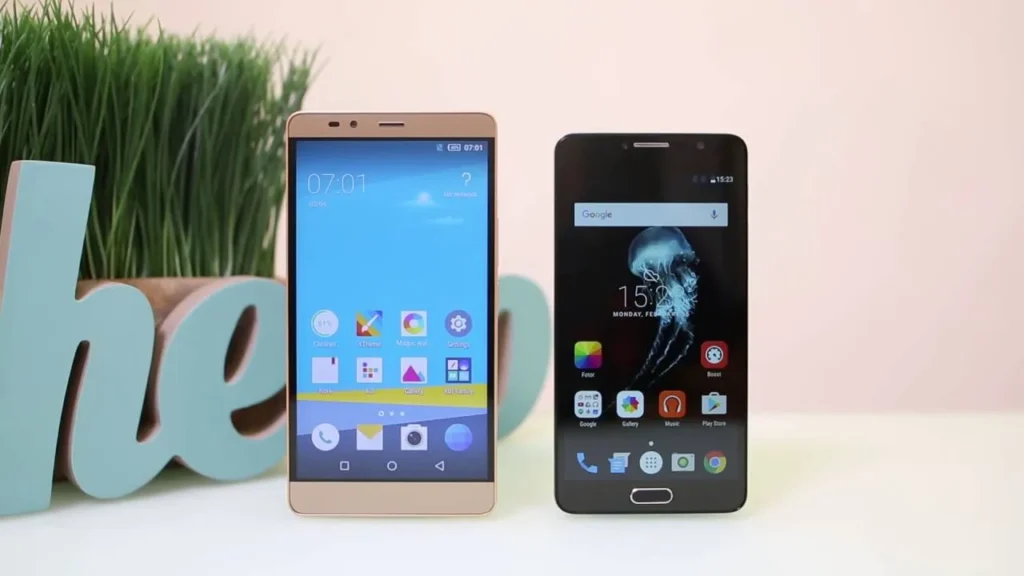
Introduction of Infinix Note 2
The Infinix Note 2 is built around three core vectors: a generous display, a high-capacity battery, and an aggressive target price. If you imagine buying decisions as a classification problem, this phone is placed in the “value large-screen” cluster. For daily tasks such as browsing, social apps, video streaming, and light multitasking, the Note 2’s entry-level chipset and modest RAM perform adequately. Its camera pipeline is optimized for good lighting — daylight shots are shareable and pleasing; low-light photos are noisier and softer. Battery endurance is a standout: typical moderate-to-light usage easily stretches to a full day and often into a second day.
What is the Infinix Note 2?
The Infinix Note 2 is a budget-to-mid-range smartphone that stacks value around a large viewing surface and a long-life battery. Architecturally, it is optimized for everyday usage patterns — media playback, web browsing, messaging, and light productivity. Consider it a pragmatic device rather than an aspirational or flagship one: the hardware choices favor battery longevity, screen real estate, and affordability over peak CPU/GPU throughput and advanced imaging subsystems.
Who should buy it?
- People who want a big screen for video and long reading sessions.
- Users who prioritize battery life and long off-grid hours.
- Budget-conscious buyers who need a reliable daily driver for calls, apps, and media.
Who should not buy it?
- Mobile gamers who expect smooth high-FPS performance.
- Buyers who prioritize flagship camera systems.
- Users need premium materials or the latest SoC speed.
Key specifications
| Category | Specification |
| Model name | Infinix Note 2 |
| OS | Android (launch version) + XOS (Infinix UI) |
| Chipset | Entry-level MediaTek / Spreadtrum / Qualcomm (varies) |
| CPU | Quad-core / Octa-core (ARM cores) |
| GPU | Mali / Adreno (entry-level) |
| RAM | 2 GB / 3 GB / 4 GB (region-dependent) |
| Storage | 16 / 32 / 64 GB (expandable via microSD) |
| Display | ~6.0–6.3″ IPS LCD, HD+ or FHD+ (SKU-dependent) |
| Rear camera | Single or dual: 8–13 MP main (+ depth sensor possible) |
| Front camera | 5–8 MP |
| Battery | 4000–5000 mAh non-removable |
| Charging | 10W–18W (specify by SKU) |
| SIM | Dual-SIM (Nano + Nano) |
| Connectivity | 4G LTE, Wi-Fi 802.11 b/g/n, Bluetooth 4.x |
| Ports | micro-USB or USB-C, 3.5 mm audio jack |
| Sensors | Accelerometer, proximity, compass, fingerprint (if present) |
| Dimensions / Weight | Example: 165 x 78 x 9 mm / ~195 g |
Design & build
The Infinix Note 2 typically adopts a pragmatic, plastic-first build with a focus on ergonomics and cost containment. The chassis, usually polycarbonate, can have matte or glossy finishes. The objective is to deliver a large display with manageable weight and acceptable durability.
Key design expectations:
- Comfortable in two-handed operation — large for one-handed maneuvers.
- Lightweight plastic reduces cost and makes it resilient to drops.
- Buttons (power and volume) are serviceable; tactile travel is average.
- The camera module is normally compact; some SKUs have a small bump.
- Colors include basic black and white, sometimes with gradient finishes for regional editions.
Display
The display is a primary selling point. Most Note 2 variants deliver large IPS LCDs that prioritize area rather than premium color or contrast.
Expectations:
- Size: Around 6.0–6.3 inches — excellent for video streaming and reading.
- Panel type: IPS LCD — balanced color and brightness, but not deep blacks like AMOLED.
- Resolution: Lower-tier SKUs use HD+ (720p); some higher-tier variants use FHD+ (1080p).
- Brightness: Good indoors; outdoor legibility depends on peak nit output.
Testing checklist:
- Measure peak brightness (nits) using a colorimeter.
- Capture an outdoor readability photo in direct sunlight (include EXIF).
- Record color accuracy (DeltaE) and contrast ratio, if possible.
Camera
The camera is tuned for social snapshots, especially in favorable light. The Imaging Pipeline usually emphasizes saturation and contrast to produce pleasing thumbnails without demanding post-processing.
Main points
- Daylight: Good color, adequate detail for social shares.
- Low light: Noticeable noise, softer detail, and limited dynamic range.
- Video: Typically capped at 1080p 30fps; stabilization is minimal.
- Front camera: Functional for selfies in good lighting.
Essential camera test pack
- Upload 12–20 original JPEGs with EXIF intact.
- Include 100% crops for close inspection.
- Capture a daylight landscape, a portrait, a close-up macro, and an indoor low-light scene.
Performance & benchmarks
Performance sits in the entry-level band and is sufficient for everyday tasks. For quantitative clarity, run a small suite of benchmarks and real-world tasks.
Benchmark protocol:
- Factory reset, close background apps, battery at 50–80%.
- Run Geekbench (single/multi), AnTuTu (if available), GFXBench (if supported).
- Real-world tests: app cold-launch times, 10–20 Chrome tabs, YouTube 1080p playback, 30-minute gaming session at medium settings.
Typical results:
- CPU and single-core scores are modest against mid-range chips.
- AnTuTu’s overall score is in the entry-level band — fine for classification of typical tasks.
- Gaming: casual titles are playable; A-like 3D games will drop frames and increase thermal load.
Battery life & charging tests
Battery endurance is the Note 2’s strongest feature. With a 4000–5000 mAh pack, it often yields multi-day runtimes for light users.
Suggested lab-style tests
- Video loop (offline, airplane mode, 50% brightness): log battery % every 10 minutes.
- Web browsing script: cycle through a list of 10 pages to emulate reading and scrolling.
- Gaming loop: 30 minutes of medium settings to evaluate drain and heat.
- Charging test: measure 0→100% and 30→80% times using the included adapter.
What to expect
- Multi-day moderate use is common with larger batteries.
- Charging speeds depend on charger wattage; stock chargers are often modest (10–18W).
- Thermal management affects long gaming sessions.
Software & updates
Note 2 ships with Android plus Infinix’s XOS interface. XOS brings additional features, but also onboard apps.
Key items to document
- Launch Android version and initial security patch date.
- List preinstalled apps and whether they are uninstallable or only disableable.
- Check the vendor’s OTA policy for security and major updates; Infinix commonly provides occasional patches, but timelines can vary by region.
Variants & price tiers
Make a clear SKU matrix to prevent shopper confusion. Example template:
| SKU code | RAM | Storage | Region | Notes |
| XNN-2-16 | 2 GB | 16 GB | Global | microSD support |
| XNN-2-32 | 3 GB | 32 GB | SEA/MEA | Slight band differences |
| XNN-2P | 4 GB | 64 GB | Selected markets | FHD display variant |
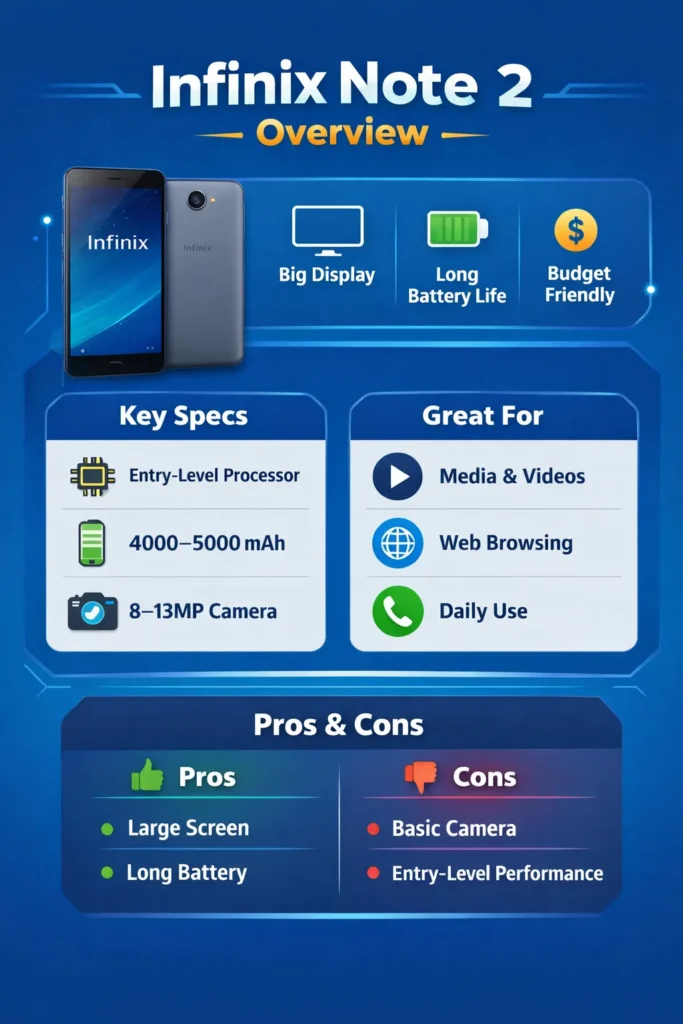
Pros & Cons
Pros
- Large display, excellent for video and reading.
- Strong battery life for multi-day usage on light use.
- Good value at the price point.
- Expandable storage (microSD) on many SKUs.
Cons
- Camera performance is average at night.
- Entry-level chipset — not ideal for heavy gaming.
- Plastic build — less premium feel than metal/glass phones.
Infinix Note 2 and its rivals
A simple comparison matrix helps convert preferences to decisions.
| Feature | Infinix Note 2 | Rival A | Rival B |
| Price | Low | Similar | Slightly higher |
| Screen size | Large | Medium | Large |
| Battery | Big | Smaller | Similar |
| Camera | Basic | Better | Similar |
| Performance | Entry-level | Mid-range | Entry-level |
Decision guide
- Choose the Infinix Note 2 if battery life and screen size are your top priorities.
- Choose Rival A if better camera quality and build matter more.
- Choose Rival B if you want a mid-range balance of speed and battery.
FAQs
A: For light gaming, yes. Heavy 3D games will lower settings and may heat the phone.
A: Some SKUs do. Check the SKU spec table before buying.
A: Typical moderate use: 1–2 days. Heavy use: about one day.
A: Yes — most SKUs include a microSD slot.
A: Many budget variants charge at standard speeds (around 10–18W).
Conclusion
If you prioritize display size and battery life while keeping costs low, the Infinix Note 2 is an excellent, pragmatic pick. If you require advanced photography, premium materials, or sustained gaming performance, look to higher-tier devices. Use the SKU matrix and local pricing to pick the right variant for your market.
