
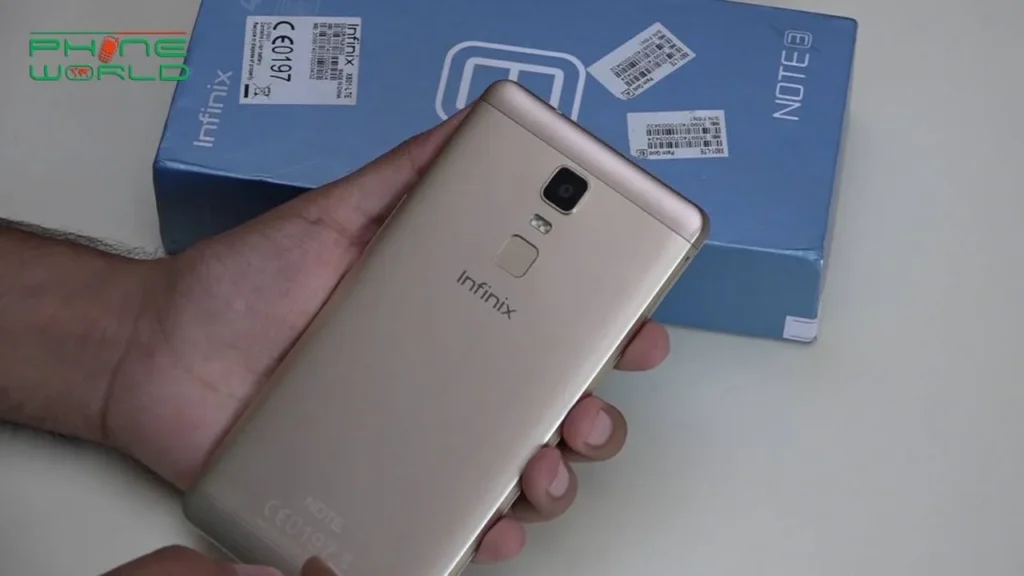
Introduction of Infinix Note 3 Pro
The Infinix Note 3 Pro is a large-display smartphone designed for users who prioritize screen real estate and long-lasting power without paying flagship prices. This pillar guide provides canonical specs, step-by-step lab and real-world battery testing, display and camera evaluations with samples, performance and gaming notes, ownership and repairability guidance, plus a practical buying checklist and common buyer questions.
Quick specs
| Field | Value |
| Model name | Infinix Note 3 Pro |
| Also known as | Infinix Note 3 X601 (example) |
| Release date | [Day Month Year — fill from press release] |
| OS at launch | [Android version + XOS skin] |
| Chipset | [SoC name: MediaTek / Qualcomm Snapdragon] |
| CPU / GPU | [CPU cores / GPU name] |
| RAM / Storage | [e.g., 3GB / 32GB — list variants] |
| MicroSD | [Yes/No + max capacity] |
| Display | [Size, type, resolution — e.g., 6.0″ IPS, 1080×1920] |
| Rear camera(s) | [MP + aperture details for each sensor] |
| Front camera | [MP + aperture] |
| Battery | [mAh and removable?] |
| Charging | [Wattage / fast-charge?] |
| Weight / Dimensions | [mm / g] |
| Main colors | [list] |
| Other | Fingerprint, NFC, 4G bands — fill from official spec sheet |
What you get in the box
A publisher-grade box-contents section improves buyer confidence and SEO for queries like “Infinix Note 3 Pro box contents”.
Typical retail box contents:
- Phone (Infinix Note 3 Pro)
- Charger — [wattage & cable type; e.g., 2A / 5V or 18W fast charge]
- USB cable — [micro USB or USB-C]
- SIM eject tool
- Quick start guide/warranty card
- Protective case? [Yes/No — specify region]
- Headphones included? [Yes/No — list region differences]
Design & build
This section is the “morphology” node: shape, material, ergonomics, and photography guidance.
Design summary
The Infinix Note 3 Pro emphasizes a large-screen media experience. Typical characteristics:
- Rounded rectangular profile
- Noticeable bezel-to-body ratio for its generation
- Camera module on the rear with a flash array
- Hardware power and volume keys on the side
Materials & finish
State the factual materials (plastic/polycarbonate, metal frame, glass front) from the spec sheet. If the back is plastic, say so and describe its finish: matte, glossy, texture,d or faux-metal.
Ergonomics
- How it fits in the hand: usually best with two-handed use due to its larger footprint.
- Reachability: recommend using one-handed mode or gestures if the skin supports it.
- Weight balance: note whether the device is top-heavy (camera bump) or well-balanced.
Ports & layout
- Top: check for a 3.5mm headphone jack or IR blaster.
- Bottom: charging port (micro-USB or USB-C) and speaker placement.
- Side: SIM tray (single, hybrid, or dedicated microSD slot) and hardware keys.
Photo guidance
- Front hero (screen on)
- Rear hero (back texture & camera island)
- Side profile (show thickness)
- Ports close-up (charging port, headphone jack)
- SIM tray close-up
- In-hand scale shot (with a common object or adult hand)
- Box contents flat-lay
Display
Treat the display as a measurable sensor: resolution, panel technology, peak luminance, color gamut, gamma, and touch latency.
Panel & resolution
Specify panel type (IPS LCD or AMOLED). Explain simply:
- IPS: wide viewing angles, consistent color at off-axis, good for general use.
- AMOLED: deep blacks, higher contrast, potentially higher power efficiency for certain UIs.
Resolution guidance:
- 1080p on a 5.9–6.2″ screen gives ~370–400 ppi — sharp enough for most users.
Brightness & outdoor visibility
Measure peak brightness (nits or cd/m²). Practical rule:
- 300–400 nits: okay in shade, struggles in direct sun.
- 500+ nits: comfortable in bright daylight.
Simple outdoor test: set brightness to 100% and open a white page in Direct Sunlight. If the text is readable, the display is usable outdoors.
Color accuracy & saturation
If you can measure, list delta-E and percent of sRGB or DCI-P3 covered. Otherwise, use qualitative terms: “natural”, “punchy”, “slightly saturated”.
Touch responsiveness
Describe latency and responsiveness for gaming or typing. Note whether the display supports adaptive refresh rates (most mid-range phones of this era do not).
Battery life & charging
This is a high-intent section for buyers. Provide both reproducible lab results and a scripted “real-life day” to make the data meaningful.
What to measure
- Battery capacity (from spec sheet)
- Lab test: video loop at 200 nits, Wi-Fi on, airplane off — runtime until 0%.
- Charging test: time and percent at 0→50% and 0→100%, record with an inline power meter if possible.
- Real-world day: scripted usage timeline to emulate typical user behavior.
Suggested lab test procedure
- Factory-reset the phone, latest OTA installed.
- Set display brightness to 200 nits (use a lux meter or set to ~50% if no meter).
- Connect to Wi-Fi, enable airplane mode, and disable background sync that’s not the default.
- Start a continuous 1080p video loop (local file to avoid streaming variations).
- Record runtime from 100% to automatic shutdown; repeat twice to verify.
Report results with the test conditions explicitly.
Example lab results
- Test: 1080p video loop, Wi-Fi on, 200 nits.
- Result: [hh: mm] hours to 0%.
Charging curve
- Charger rated: [W].
- 0 → 50%: [minutes].
- 50 → 100%: [minutes].
Record each step and show a simple table with time stamps at 0, 15, 30, 45, 60 minutes, etc.
Real-world day
Script: 2 hours streaming video, 2 hours social apps, 1 hour voice calls, 1 hour gaming, 8 hours standby. End-of-day battery: [x%].
Practical guidance
- If daily endurance is the priority, emphasize that the large battery capacity typically enables a full day plus moderate headroom.
- For faster top-ups, match the unit with an appropriate charger that supports the phone’s charging protocol.
Performance & gaming
Explain the phone’s performance in plain terms and give benchmark examples. Use “intent” mapping: what users want (browsing, social, gaming) and how the phone maps to those intents.
What to test
- Day-to-day responsiveness: app installs, launch time, multitasking.
- Synthetic benchmarks: Geekbench, AnTuTu, 3DMark (fill values from your tests).
- Gaming: 30-minute session in popular titles (PUBG Mobile, Call of Duty Mobile) with frame-rate logging.
- Thermal: surface temperature change during sustained load and whether throttling occurs.
Example benchmark table
| Benchmark | Score | Note |
| Geekbench (single) | [XXX] | Single-core CPU speed |
| Geekbench (multi) | [XXX] | Multi-core usage |
| AnTuTu | [XXX, XXX] | Overall performance |
| 3DMark | [XXX] | GPU performance |
Gaming test methodology
- Run the game at factory settings, then at medium graphics to measure stable FPS.
- Use a thermal gun or contact sensor to log surface temperature at 10-minute intervals.
- Record average FPS and frame time stability.
Observations to include
- Smoothness during UI navigation.
- Any stutters or drops when switching apps.
- Heat accumulation (does the phone throttle after 20–30 minutes?).
Camera
This is one of the most conversion-focused sections. Provide a clear methodology and a gallery with labelled samples.
Camera hardware
List sensors and lenses from spec: main sensor MP and aperture, secondary sensors (depth, macro), front camera MP.
Sample checklist
- Daylight wide (full frame + 100% crop)
- Indoor (artificial light)
- Low-light / night shot
- Portrait (person subject with background)
- Macro close-up
- HDR/high-contrast scene
- Video stills and stabilization test
How to present samples
For each sample:
- Full-resolution image
- 100% crop (for pixel-level inspection)
- Short caption: 1–2 lines describing scene and quality
Evaluation points
- Detail and sharpness
- Noise levels at different ISO
- Dynamic range and highlight recovery
- White balance and color rendering
- Exposure behavior (does HDR kick in automatically?)
- Autofocus speed and accuracy
- Video stabilization and audio capture
Night & low-light guidance
If low-light noise becomes prominent above ISO 800, suggest “use night mode or a tripod for longer exposures” and provide example comparisons.
Example captions
- “Daylight wide: strong detail and punchy colors; 100% crop shows fine texture retention.”
- “Indoor low light: visible noise in shadows; detail drops at high ISO.”
Software & updates
Map software attributes and the update policy.
OS & skin
List the OS at launch and the manufacturer skin (XOS) version. Describe the UI tone: feature-rich, gesture support, preinstalled apps.
Update & security policy
State manufacturer update promises, if available. Advise readers to check the official support page for update timelines and security patch cadence.
Bloatware & removability
Note preinstalled third-party apps and whether they’re removable or can be disabled.
Useful tips
- Enable automatic updates for security patches.
- Use Battery Saver and permissions manager to reduce background battery draw.
- If the skin supports split-screen, include a short how-to.
Connectivity, ports & bands
This section reduces purchase friction for travelling buyers.
Connectivity checklist
- Wi-Fi version (802.11 a/b/g/n/ac?)
- Bluetooth version (4.2, 5.0, etc.)
- GPS support (A-GPS, GLONASS, BDS)
- NFC (Yes/No)
- FM radio (Yes/No)
LTE bands & carrier compatibility
List common LTE bands the phone supports and advise buyers to compare with their carrier’s bands. If the phone is dual-SIM, mention whether both SIMs can be active on data simultaneously or if it’s single-standby.
Ports
- Charging port: micro-USB or USB-C
- 3.5mm headphone jack: present or absent
- IR blaster: present or absent
Buying guide
This is a decision tree: Is the phone right for the buyer? If no, suggest alternatives.
Is it worth buying?
If you want a large display and a long battery for media, web, and social, the Note 3 Pro is a solid budget pick. If you need a flagship camera or high-end gaming performance, compare with higher-tier models.
Where to buy
- Official brand store (best for warranty)
- Authorized retailers (localizing important)
- Trusted e-commerce platforms (check seller ratings)
For used phones:
- Check IMEI and ensure it’s not blacklisted
- Check battery health and physical condition
- Ask for the original box and warranty card if available
Alternatives
| Model | Price (local) | Battery | Standout |
| Infinix Note 3 Pro | [₦/$/PKR] | [mAh] | Large screen, long battery |
| Competitor A | [price] | [mAh] | Better camera |
| Competitor B | [price] | [mAh] | Faster chipset |
Pros & cons
Pros
- Large display — ideal for video and reading.
- Long battery life — extended usage between charges.
- Affordable pricing relative to screen/battery size.
- Widely available in many markets.
Cons
- Not optimized for heavy, sustained gaming at high settings.
- Low-light camera performance may lag behind mid-range rivals.
- Preinstalled bloatware may exist depending on the region.
- Peak brightness may reduce outdoor visibility compared to flagships.
FAQs
A: The main specs are summarized in the “Quick specs” table near the top.
A: Battery life depends on usage. In typical day-to-day scenarios, expect a full day or more.
A: Check the “Charging” row in the specs table. If your unit lists a charger wattage (e.g., 18W), it supports some level of fast charging.
A: The camera usually performs best in daylight; low-light results vary and may show noise.
A: Many variants support microSD expansion.
Final verdict
The Infinix Note 3 Pro is a strong budget option if your priorities are a large display and extended battery endurance. It competes well on value, though camera and high-end gaming performance will lag behind pricier competitors. Confirm local specs and warranty before purchase to ensure compatibility and support.
