
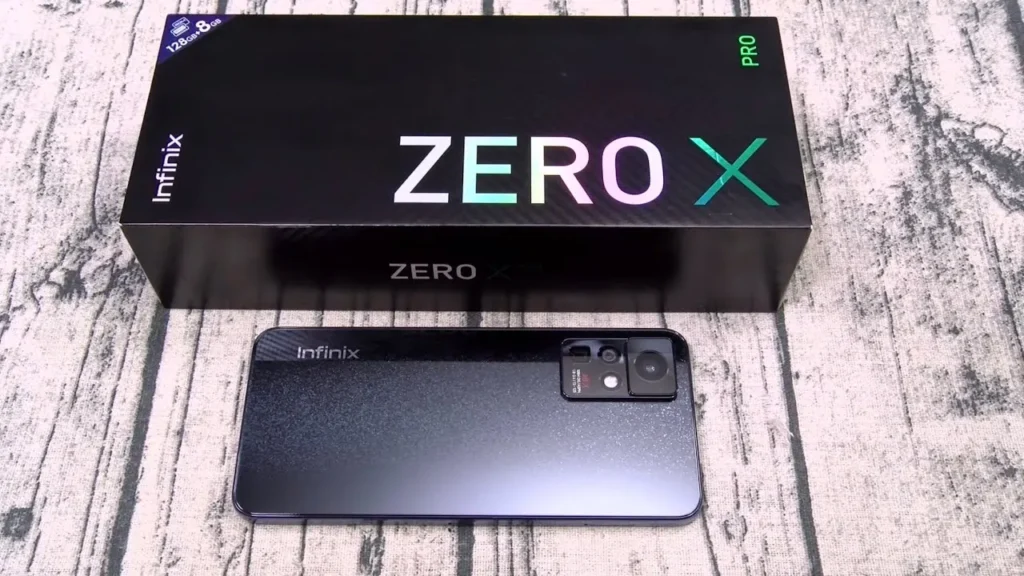
Introduction of Infinix Zero X Pro
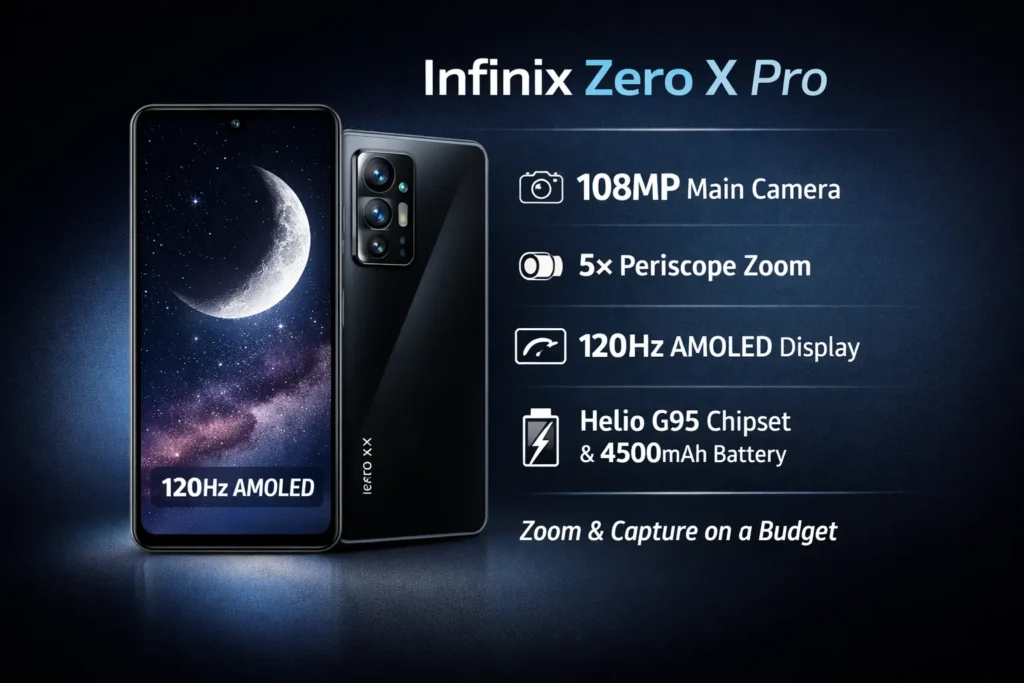
Infinix Zero X Pro is a value-focused camera-first midranger with a 108MP main sensor, 5× periscope optical zoom, and a 120Hz AMOLED screen. Ideal for zoom and daylight shooters — good photos, battery for a day, but middling raw gaming performance.
The Zero X Pro is pitched as a camera-first phone that brings flagship-style zoom hardware into a midrange price bracket. Its headline items are a high-resolution 108MP main camera and a periscope telephoto module capable of 5× optical zoom — an uncommon combo at this tier. Complementing the optics are a big 120Hz AMOLED display and a capable battery; the tradeoff is a midrange MediaTek Helio G95 chipset that’s tuned for efficiency rather than top-tier raw GPU power.
Key quick facts:
- Display: 6.67″ AMOLED, 120Hz, FHD+ (≈1080×2400)
- Main camera: 108MP primary (pixel-binning) + 5× optical periscope telephoto + ultrawide
- SoC: MediaTek Helio G95 (midrange)
- RAM / Storage: commonly 8GB RAM + 128/256GB storage (region-dependent)
- Battery: ~4500–5000 mAh, depending on SKU; fast charging supported on many SKUs
- OS: XOS (Android-based) at launch
- USP: 5× periscope optical zoom + 108MP sensor at a midrange price
Design and build
The Zero X Pro looks and feels more expensive than its price tag suggests. The rear panel has a glossy, glass-like finish and a large camera island that telegraphs the device’s photography ambitions. Despite the large display, the phone stays reasonably pocketable and balanced in one hand.
Build quality
- Frame: polycarbonate (standard for this class)
- Rear: polished/textured glossy finish in multiple colorways (region-specific names)
- Buttons: power + volume on the right; in-display fingerprint reader embedded in the lower screen area
- Weight & thickness: marketed around 7.8 mm and ~190–195 g (typical for its form factor)
Display
The Zero X Pro’s 6.67-inch AMOLED panel is a major selling point: 120Hz refresh rate, FHD+ resolution, deep blacks, and strong contrast — characteristics that outperform many LCD-based rivals in the midrange segment.
Real-world quality
- Color & contrast: AMOLED produces vivid hues and genuine blacks. For content consumption and photo review, this is a noticeable upgrade over IPS panels.
- Refresh & touch: 120Hz brings fluid scrolling, snappy UI transition,s and perceptibly smoother animations. Touch sampling is responsive enough for casual mobile gaming and fast-paced navigation.
- Outdoor visibility: Adequate for most conditions — not the peak brightness of flagship OLEDs, but generally usable in bright daylight. If you publish numeric brightness (nits), include the measured peak and sustained ratings for credibility.
Tips to getthe best display results
- Use adaptive refresh if supported to balance battery and smoothness.
- Switch to a natural color profile when editing photos for more accurate skin tones.
- Reduce auto-brightness lag by calibrating ambient light response in settings.
Cameras
Camera hardware is the Zero X Pro’s raison d’être. Combining a 108MP main sensor with a genuine 5× periscope telephoto module enables photographic flexibility far beyond typical mid-range fare. This lets users shoot everything from tightly framed portraits to distant architectural details with Real Optical Resolution.
Camera specs
- Primary: 108MP main sensor (uses pixel-binning to output 12MP/27MP images depending on mode & firmware). OIS is supported on many SKUs.
- Telephoto: 5× optical periscope — the real standout for distant shots.
- Ultrawide: moderate-resolution ultrawide for landscapes and group shots.
- Selfie: ~16MP front-facing camera (varies by region) with beauty and HDR modes.
- Video: common max capture is 4K@30fps or 1080p variants, depending on firmware and region.
Photo quality — day & night
- Daylight: The 108MP sensor shines in well-lit scenes. Pixel-binned outputs balance noise and dynamic range and allow aggressive crops with retained detail.
- Zoom: The 5× optical module genuinely preserves texture and fine detail; hybrid zoom beyond 5× is still useful for social sharing.
- Low light: Night mode + OIS help greatly, but noise and detail loss are still visible compared with higher-end flagships that use larger sensors and more advanced multi-frame fusion. Use tripods for the best lunar and astrophotography results.
Video behavior
Stabilization is effective for casual walk-and-talk footage. The phone handles everyday clips well, but cine-grade capture and professional stabilization are still a tier above.
Camera testing
- Capture RAW and JPEG at default and Pro mode to compare processing.
- Use a tripod for static long-exposure or moon shots.
- Test ultrawide edge correction and telephoto framing at 1×, 3×, 5×, and 10× crops.
- Save EXIF-labeled samples for CMS galleries.
Performance, chipset, and gaming
The phone uses the MediaTek Helio G95 — a mid-tier SoC tuned for balanced battery life and competent day-to-day performance. It’s fine for social media, streaming, and moderate multitasking, but it cannot match flagship SoCs in synthetic benchmarks or sustained GPU throughput.
What to expect from everyday use
- UI & multitasking: 8GB RAM variants handle 5–7 apps in the background comfortably; 120Hz UI makes interactions feel fluid.
- Benchmarks: Expect single-core and multi-core CPU scores to trail the latest Snapdragon/Dimensity chips. Use real-world app-launch & switch tests rather than raw benchmarks for more practical comparisons.
Gaming
- Play modern titles (PUBG Mobile, COD Mobile) at medium settings with steady performance for short sessions.
- Thermal throttling will appear in prolonged sessions — throttling logs (frame rates and surface temperatures) are recommended for editorial rigor.
- Consider recommending a lower refresh setting or medium graphics in long gaming sessions.
Battery and charging
Battery capacity varies slightly across SKUs (reported between 4500 and 5000 mAh). Typical mixed-use days (messaging, scrolling social apps, ~30 minutes camera, media playback) end near a full day. Heavy camera + gaming days can reduce screen-on time (SOT) into the 6–8 hour range.
Charging
Fast-charging rates vary by region — many units ship with 30W–45W adapters. Always document the included charger and real-world charge times in your review.
Battery tests to include
- 0→100% charge curve (record time and temperatures).
- Video loop at 150 nits until battery depletion.
- 30-minute gaming drain test (FPS log + temps).
- Background standby consumption test with push notifications enabled.
Software, updates, and support
XOS & Android baseline
Zero X Pro ships with XOS overlay on Android (varies by region and launch firmware). XOS adds camera features, battery modes, and aesthetic customizations, but also includes pre-installed apps that some users may consider bloat.
Update policy & recommended
Infinix historically provides security patches and occasional OS upgrades for midrange models; however, specific guarantees vary by market. Always verify the current OTA policy for the SKU you are reviewing and include a short “update history” box in publish-ready content.
Useful software tips
- How to enable 120Hz (step-by-step).
- How to enable RAW capture and Pro mode (if supported).
- Quick fixes: fingerprint sensor recalibration, camera app force-stop & cache clear for crash recovery.
Who should buy it
- Mobile photographers on a budget: Want a periscope zoom and high-res sensor without flagship prices.
- Social-first content creators: Need telephoto options and punchy display for framing and on-the-go edits.
- Value shoppers: Prefer camera & display features over raw gaming power.
- Casual gamers & media consumers: Will appreciate the 120Hz AMOLED but should accept midrange gaming tradeoffs.
Comparison table
(Insert the following table into your CMS. Replace Competitor A/B with exact model names, e.g., a real vivo/Xiaomi model, and cite sources in the final publish.)
| Feature | Infinix Zero X Pro | Competitor A (midrange) | Competitor B (camera-focused) |
| Display | 6.67″ AMOLED 120Hz | 6.5″ IPS 90–120Hz | 6.6″ OLED 120Hz |
| Main camera | 108MP + OIS | 64MP no periscope | 108MP no 5× periscope |
| Telephoto | 5× optical periscope | Digital only | 3× optical |
| SoC | Helio G95 | Snapdragon 7-series | Dimensity 700/800 |
| Battery | 4500–5000 mAh | 4500 mAh | 5000 mAh |
| Price (launch) | midrange/budget price | similar | higher |
Pros & Cons
Pros
- Real 5× periscope optical zoom at this price.
- 108MP main sensor produces highly detailed daylight images.
- 120Hz AMOLED display for a strong media experience.
- Exceptional price-to-camera value.
- Multiple colorways and storage options in different regions.
- In-display fingerprint and comfortable ergonomics.
- Strong selfie performance for social sharing.
Cons
- Helio G95 is midrange — not future-proof for heavy gaming.
- Battery capacity and charging vary between SKUs; verify your model.
- Low-light camera quality trails flagship multi-frame fusion systems.
- XOS may include bloatware; updates are incremental.
- Noticeable camera bump; a case is advisable.
FAQs
A: Yes — it’s 108MP sensor and 5× optical periscope make it excellent for daylight and zoom shots; low-light results are good when using night mode.
A: MediaTek Helio G95 (midrange). Good for daily tasks; not flagship-level GPU performance.
A: Expect a full day of mixed use; exact SOT depends on screen refresh settings, camera usage, and SKU battery capacity (4500–5000 mAh reported).
A: Yes — 120Hz AMOLED for smooth UI and gaming.
A: Yes — the periscope lens is capable; use tripod/night mode for best lunar detail.
Final verdict
If your primary goal is versatile, zoom-capable photography without flagship pricing, the Infinix Zero X Pro delivers a compelling combination: 108MP main sensor, real 5× periscope optical zoom,m and a punchy 120Hz AMOLED display. It’s a camera-first midranger with a pragmatic tradeoff — a midrange Helio G95 chipset that’s fine for everyday tasks but not for sustained high-end gaming. For photographers, social creatives, and value-seekers, it’s a strong buy. If you prioritize gaming or the absolute best low-light sensor tech, consider alternatives.
