
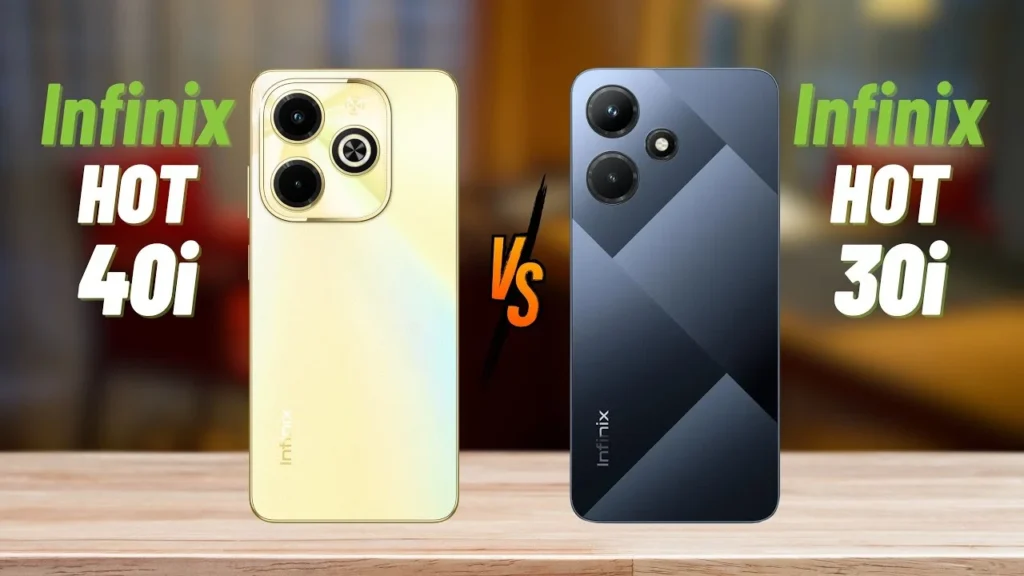
Introduction of Infinix Hot 30i vs Hot 40i
Choosing between the Infinix Hot 30i vs Hot 40i is not really about one tiny spec on a chart. It is about the way each phone feels in daily use, how much camera quality matters to you, how much you care about newer software, and how big the price gap is in your market. That is the real heart of this comparison.
At first glance, both phones sit in the same budget-friendly space. Both aim at buyers who want a large display, a long-lasting battery, a simple design, and enough speed for everyday tasks. But once you look closer, the Hot 40i begins to look like the more complete option. It brings a stronger camera story, a fresher software experience, and a more polished overall package. The Hot 30i, on the other hand, remains a sensible low-cost choice for people who care more about saving money than getting the latest upgrade.
That means the decision is not complicated once you know what matters. If the price difference is small, the Hot 40i is usually the smarter purchase. If the Hot 30i is clearly cheaper, it can still make sense for basic use. That is the short version. The rest of this guide explains the full picture in simple language so you can choose confidently.
Quick verdict
If the price gap is small, buy the Infinix Hot 40i.
Why? Because it gives you a more attractive overall mix of features. The Hot 40i is positioned as the more modern budget phone, with a stronger rear camera, a much better selfie camera, and a newer software feel in many market listings. It is the device that looks more ready for everyday use in 2024 and 2025-style buying expectations.
Buy the Infinix Hot 30i only if it is noticeably cheaper in your market. The battery class is very similar, the charging class is very similar, and the display experience is close enough that a large price difference can make the older phone the better money-saving option.
In simple words:
- Hot 40i = better all-round buy
- Hot 30i = cheaper fallback option
Hot 30i vs Hot 40i at a glance
Here is the fast comparison before we go deeper.
| Category | Infinix Hot 30i | Infinix Hot 40i |
| Battery | 5000mAh | 5000mAh |
| Charging | 18W Type-C | 18W FastCharge, Type-C |
| Display | 6.6-inch HD+, 90Hz | 6.56-inch punch-hole, 90Hz, FHD+ marketing on official page |
| Main camera | Varies by market; official pages show different regional setups | 50MP Dual AI Cam |
| Selfie camera | Varies by market; some official pages show 5MP, others 8MP or 8MP on NFC variant | 32MP selfie camera |
| Software | Many listings show Android 12 / XOS 10.6 | Many listings show Android 13 / iOS 13 |
| Best for | Lowest possible budget | Better overall value and camera |
The key thing to notice here is the pattern. These two phones are similar in battery and charging, and they are both built for affordable everyday use. But the Hot 40i clearly pulls ahead in camera quality and software freshness, while the Hot 30i survives as the lower-cost choice.
Another important point is that the Hot 30i can vary by region. That means some of its specs are not identical across every market. For that reason, the safest way to compare these phones is not to obsess over a single regional listing, but to focus on the broader user experience. And in that broader view, the Hot 40i comes out ahead.
Design and display
At first glance, both phones follow the familiar budget Infinix formula. They are made for people who want a large screen, a modern-looking body, and a simple experience without paying a premium price. That is why the design section does not need to be overly dramatic. These are not phones trying to impress with luxury materials or flagship styling. They are trying to offer practical value.
The Hot 30i official global page highlights a 6.6-inch HD+ 90Hz True Bright Display, a 5000mAh battery, and 18W Type-C fast charging. That tells you a lot right away. It is a phone made for casual use: YouTube, WhatsApp, TikTok, browsing, calls, and light app activity. The display is large and smooth enough, but it is not meant to compete with higher-end panels.
The Hot 40i also stays within the same budget zone, but it looks a little more refined. It promotes a 6.56-inch punch-hole display with a 90Hz refresh rate and a more modern visual presentation. Even if the screen size is nearly the same, the overall feeling is more updated. The punch-hole design makes the device appear fresher and more current, which matters to buyers who care about aesthetics as well as function.
Which display is better?
If you only care about smoothness, both phones are in the same general zone because both offer 90Hz. That means scrolling, swiping, and general movement feel decent for this price class. If you care more about how modern the phone feels in hand and on screen, the Hot 40i has the edge. Its design language is just more polished and more in step with today’s budget smartphone trends.
If your only goal is to watch videos, check social apps, and browse the web without spending too much, the Hot 30i is still perfectly usable. It is not a bad display. It is simply the more basic one.
Simple display verdict
The display gap is not huge.
The real difference is not “best screen ever.”
The real difference is “good enough screen, newer feel, better camera package,” and that points to the Hot 40i.
Performance and software
This is where many comparison articles waste space. They list chipset names and RAM options, but they fail to explain what those details actually mean in real life. A good buyer-focused article should translate the technical side into everyday language.
The Hot 30i is an entry-level budget device, and that is the right way to understand it. In regional official listings, it appears with chipsets such as the MediaTek Helio G37 or the Unisoc T606, and many listings place it on Android 12 or XOS 10.6. That tells you the phone is fine for basic tasks, but it is not the freshest or most future-ready option.
The Hot 40i is also a budget phone, but it is the newer-feeling one. Official Infinix pages describe it with an octa-core chipset, an XBOOST gaming engine, and many market listings place it on Android 13 / XOS 13. That may not sound dramatic on paper, but in real use, it matters. A newer software base often feels cleaner, more polished, and easier to live with over time.
What this means in daily life
For normal users, the difference is easy to understand:
- The Hot 30i is okay for calls, messaging, light browsing, and social media.
- The Hot 40i is better if you use more apps, switch between tasks often, or want a phone that feels a little more current.
That does not mean the Hot 40i becomes a performance beast. It does not. It is still a budget phone. But it does feel more balanced and more ready for the way people use affordable phones today.
The official Hot 40i positioning also leans into multitasking and the XBOOST gaming engine. That is not an accident. Infinix is clearly trying to present it as the more responsive, more flexible option in the lineup.
Storage behavior matters too.
This is one of the most overlooked parts of the comparison. Budget phones can feel slow not only because of the chipset, but also because of the way storage is handled. Once storage fills up, weaker devices can become sluggish, less responsive, and more frustrating to use.
Some official Hot 30i regional pages highlight UFS 2.2 and storage-related features, while other regional pages show different memory and camera combinations. That suggests the Hot 30i family is a little inconsistent across markets. For readers, that means the exact experience can vary depending on the version sold locally.
The key takeaway is simple: do not judge these phones by RAM alone. In budget devices, software freshness, storage behavior, and optimization often matter just as much as raw memory numbers. In that broader sense, the Hot 40i is the easier phone to recommend.
Performance verdict
For simple daily use, both phones are acceptable.
For a cleaner, fresher, more comfortable experience, the Hot 40i wins.
For people who only need the cheapest workable option, the Hot 30i still gets the job done.
Camera comparison
The official Hot 40i page promotes a 50MP Dual AI rear camera and a 32MP Selfie Camera. That is a major upgrade in how the phone is marketed and how it is likely to be experienced by users who care about pictures, portraits, and social media selfies. Infinix also promotes features such as night shots, portrait mode, slow motion, and wider group selfies. That signals very clearly who this phone is for.
The Hot 30i is more complicated because its camera setup can vary by market. Some official regional pages show a 13MP rear camera with AI support and an 8MP front camera. Other pages show different combinations, and a Hot 30i NFC page may also present its own variant-specific setup. That means the Hot 30i camera story is not fully uniform everywhere.
What is the practical result?
In plain English:
- If you take a lot of selfies, the Hot 40i is the better pick.
- If you post on social media often and want your front camera to look stronger, the Hot 40i is the better pick.
- If you only need basic photos and the Hot 30i is much cheaper, the Hot 30i can still do the job.
The biggest reason is simple: the Hot 40i’s camera package is more clearly designed as an upgrade. It is not just about the megapixel count. It is about the way the whole camera system is positioned. The large selfie camera number is repeated for a reason. Infinix wants buyers to notice it, and buyers should.
Rear camera experience
For rear shots, both devices are acceptable for a budget segment, but the Hot 40i has a more attractive camera pitch. The 50MP main camera is much more compelling on paper, and in practical terms, it usually gives users more confidence when taking everyday shots like food, street scenes, family photos, and casual daylight pictures.
The Hot 30i can still capture basic images, but it is better understood as a simple, no-fuss phone camera rather than a standout imaging tool.
Selfie camera experience
This is where the difference becomes even easier to explain.
The Hot 40i has the better selfie setup by a wide margin. The 32MP front camera makes it a more compelling choice for students, content creators on a tight budget, people who enjoy video calls, and anyone who values front-camera clarity.
The Hot 30i is fine for casual selfies, but it is not as strong or as future-facing. If selfies matter at all, the Hot 40i is the safer and smarter recommendation.
Camera verdict
For camera buyers, the Hot 40i wins.
For bargain hunters, the Hot 30i only wins if the price difference is big enough to justify giving up the camera upgrade.
Battery and charging
This section should stay short, clear, and honest.
Both phones are built around the same basic battery idea: 5000mAh plus 18W Type-C charging. That is why battery life should not be treated as the main reason to choose one phone over another. They live in the same battery class, and both are designed to last through a normal day for light to moderate users.
The Hot 40i official page even uses long standby and usage claims to promote the device, but those marketing claims do not change the central truth. The two phones are very similar in this category. Neither is a battery outlier. Neither is clearly a battery failure. Both are just practical budget phones that should keep up with standard everyday activity.
What should readers understand?
Say this very directly:
- Both phones can last a full day for light to normal use.
- Both phones charge in a similar budget-friendly range.
- The battery should be treated as a tie.
That is an important point because many comparison pages make battery sound like a major differentiator when it really is not. Here, the real buying decision comes from camera quality, software freshness, and price.
Battery verdict
Battery and charging are a tie.
Do not overstate them.
Do not turn them into the hero section.
The real story belongs to the camera, software, and value.
Price and value for money
This is the section that can decide the whole purchase.
The best phone is not always the newest one. It is the one that gives you the most useful improvement for the smallest extra cost. That is exactly why the Hot 40i should be recommended when the price difference is small, while the Hot 30i should be positioned as the cheaper backup option.
That logic also matches what most buyers actually do in real life. People compare phones and then ask a simple question: “Is the extra money worth it?” In this case, the answer is usually yes for the Hot 40i, as long as the price gap is reasonable. The better camera package and newer software feel make the extra spending easier to justify.
How to explain value
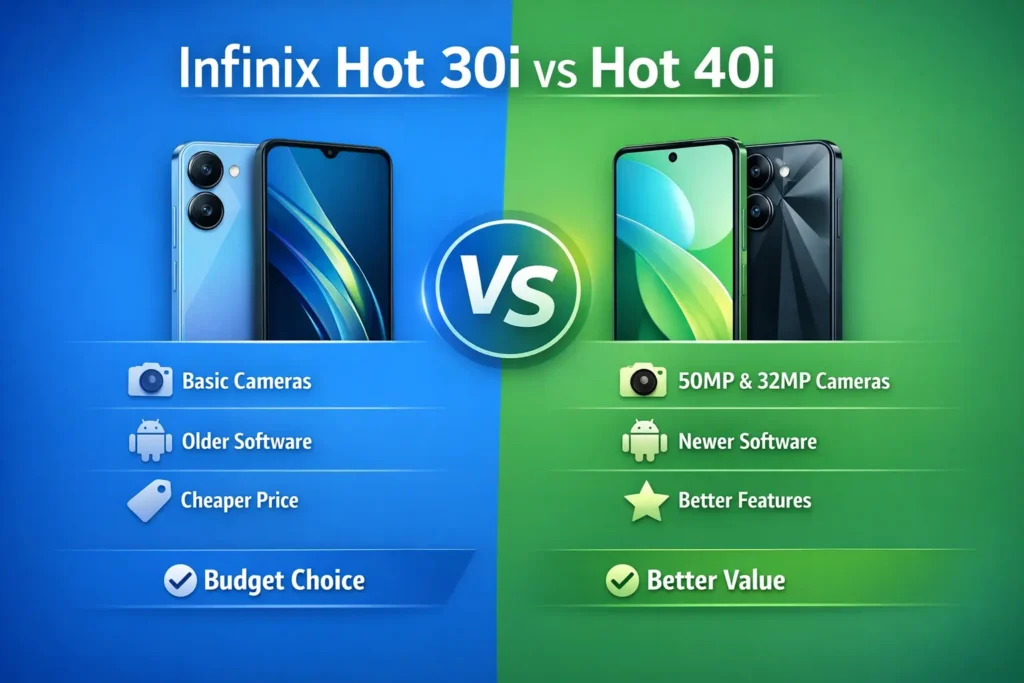
You can tell readers:
If the Hot 40i costs only a little more, it is worth paying extra for:
- a better selfie camera,
- a better rear camera,
- newer software,
- a more modern feel.
If the Hot 30i is much cheaper, it still makes sense because:
- The battery is similar,
- charging is similar,
- The display is still 90Hz,
- Basic daily use is enough for it.
That is the cleanest way to talk about value. It is easy to understand, it sounds natural, and it matches what most budget shoppers care about.
Price verdict
The Hot 40i is the better value if the price gap is small.
The Hot 30i is only a better value if it is clearly cheaper.
Which one is better for use?
This section matters because it turns technical comparison into real-life decision-making. People do not search only for processor names. They search because they want to know which phone fits their use case.
For gaming
Neither of these phones is a true gaming phone. They are budget devices, and that means expectations should stay realistic. The Hot 40i has the better gaming story because Infinix highlights an octa-core chipset and XBOOST gaming engine on the official page. That does not make it a performance monster, but it does make it the more appealing option for light gaming and general responsiveness.
The Hot 30i can handle simple games, but it is the less exciting choice if someone wants smoother switching, a newer-feeling interface, and a stronger all-around experience.
Gaming winner: Hot 40i
For selfies
This is the clearest win in the whole comparison. The Hot 40i is significantly stronger for selfies because the official page heavily promotes the 32MP selfie camera. That alone makes it far more interesting for people who take a lot of front-camera photos, use video calls often, or care about social media content.
The Hot 30i can still take selfies, but it is not as compelling in this area. When self-portrait quality matters, the Hot 40i is the obvious pick.
Selfie winner: Hot 40i
For everyday use
For calls, messages, social media, browsing, and video watching, both phones are good enough for basic needs. The Hot 40i still feels better because it is newer and more balanced. But if the buyer is very budget-conscious, the Hot 30i can still handle everyday tasks without major trouble.
Everyday-use winner: Hot 40i
For battery-focused buyers
There is no meaningful gap here. Both phones are built around a 5000mAh battery, so battery-focused buyers should simply choose whichever one gives the better total value in their market.
FAQs
The Hot 40i is better overall because it has a stronger camera setup and a newer software feel. The Hot 30i only makes sense when it is cheaper.
Yes. The official Hot 40i page highlights a 32MP selfie camera, which is a clear advantage over the Hot 30i in most market comparisons.
Yes, both are built around a 5000mAh battery with 18W Type-C charging. That is why the battery should not be the main decision factor.
The Hot 40i is the better pick for light gaming and smoother everyday use, but neither phone is a true gaming phone.
Yes, but only if it is much cheaper. If the price difference is small, the Hot 40i is the smarter choice.
Final verdict
The Infinix Hot 40i is the better overall phone. It wins where it matters most: camera quality, selfie performance, and software freshness. The Infinix Hot 30i is only worth choosing when it is significantly cheaper, because battery and charging are too similar to make them the main deciding factors.
