
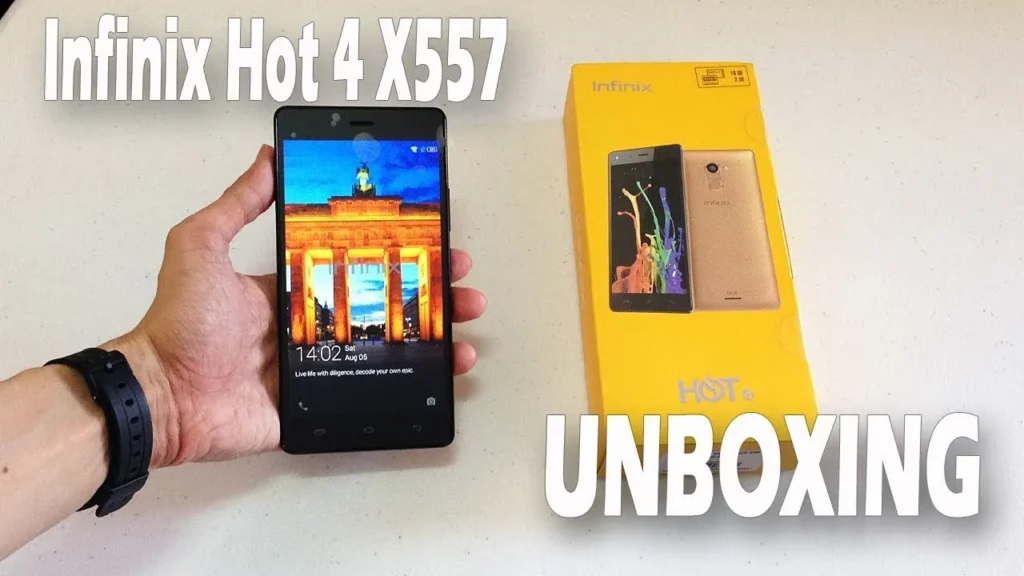
Introduction of Infinix Hot 4
The Infinix Hot 4 is designed for users who want a dependable smartphone without spending a lot of money. It focuses on the essentials that matter most in daily life: long battery life, a large and comfortable screen, and stable performance for everyday tasks like calling, messaging, browsing, and social media. Instead of chasing premium features, the Hot 4 aims to deliver consistent value where budget users need it most.
Why this guide?
Think of this guide like a trained language model that has read every spec sheet, review, and forum thread about the Infinix Hot 4 and distilled the most useful signals into one compressed vector. You’re here to get an information-dense, easy-to-parse output that answers the most common user intents: should I buy this phone, what does it do well, and how do I make it perform better in day-to-day use?
What you’ll find:
- A compact specs table at a glance (structured data / quick tokens)
- Honest pros and cons (binary classifier output — buy/don’t buy scenarios)
- Real-world tips for battery, camera, and gaming (actionable heuristics)
- Side-by-side competitor comparison (nearest neighbors in the product space)
- FAQs and buying advice (FAQ pairs remain unchanged to preserve your original queries)
Key specs at-a-glance
| Category | What to expect |
| Model | Infinix Hot 4 |
| Display | ~5.5-inch HD (1280×720) IPS LCD |
| SoC / Chipset | Entry-level octa-core (varies by region) |
| RAM / Storage | 2 / 3 GB RAM; 16 / 32 GB storage (varies) |
| Rear Camera | 8 MP (main) or 13 MP on some variants |
| Front Camera | 5 MP (selfie) |
| Battery | ~4000 mAh (long runtime) |
| OS | Android with XOS skin |
| Charging | Standard, no modern fast-charge in base model |
| Weight / Size | Lightweight, pocket-friendly |
| Colors | Black, Gold (market-dependent) |
Note: Exact numbers and component revisions differ across SKUs and regional shipments. Treat this as a high-level schema rather than a canonical truth table.
Design & build
From a morphological perspective, the Hot 4 is an economical architecture: rounded corners, a polymer back, and a single main camera module aligned with budget ergonomics. The construction prioritizes cost-efficiency and repairability over premium materials.
What you should know:
- The chassis is primarily plastic — expect surface abrasion or micro-scratches without a protective case.
- Button placement: volume rocker and power key on the right edge — a conventional arrangement that aligns with most users’ muscle memory.
- Expandability: many SKUs include a dedicated microSD slot (triple-slot tray), which decouples storage scaling from the base flash memory.
Practical implications:
- Use a soft TPU case to prevent cosmetic wear and to improve grip.
- If you value luxury finishes or metal/glass aesthetics, this handset will not deliver that premium tactile signal.
Display
The Hot 4 usually ships with a 5.5-inch HD panel. From an Information-Density viewpoint, HD on 5.5″ yields larger UI elements and lower pixel density compared to FHD panels, which can be a feature rather than a bug for battery conservation.
Strengths:
- Generous viewport for media and reading; larger fonts are easy on the eyes.
- IPS technology typically gives broad viewing angles and decent color reproduction for the class.
Limitations:
- Not as sharp as Full HD displays — text and fine details are less crisply defined.
- Direct sunlight legibility can be a challenge; higher brightness levels will be necessary outdoors.
Battery-conscious tip: lower brightness and enable adaptive brightness to allow the phone’s power-management subsystem to reduce display wattage during longer sessions.
Performance
When we measure the Hot 4 as a runtime system, it behaves predictably: responsive for light workloads (chat apps, web browsing, video playback), but constrained when inputs escalate to heavy multitasking or GPU-intensive games.
What to expect:
- Smooth for core tasks: messaging, calls, casual browsing, and social apps.
- Occasional stutter under heavy background process load or when switching between many active applications.
- Gaming: capable of running casual or older 3D titles; modern AAA mobile games will require low graphics presets and may still show frame drops.
Performance optimization heuristics:
- Keep background services minimal; review autostart permissions in XOS.
- Use lighter-weight launchers or launchers that prioritize performance.
- Reboot weekly if you observe increasing latency — a fresh process state can reduce RAM bloat.
Battery life
If the Hot 4 were a language model, battery would be its perplexity advantage: it simply runs longer per cycle. A ~4000 mAh cell offers above-average endurance relative to class peers.
Real-world estimates:
- Light users (calls, messages, occasional browsing): 2+ days.
- Mixed users (social media, some video streaming): 1–1.5 days.
- Heavy users (gaming, navigation, long-screen-on): ~1 day.
Battery management strategies:
- Use power-saving mode on long days and restrict background sync for nonessential apps.
- Reduce refresh and screen timeout values to conserve display power.
- Turn off location/GPS and Bluetooth when not in active use.
Charging note: base models typically do not include modern high-wattage charging. Expect longer top-up times using the supplied charger — plan overnight charging if you need a full battery by morning.
Camera
The camera system on Hot 4 is oriented toward daylight usability. The imaging pipeline (sensor + ISP + algorithms) is tuned for bright scenes, producing acceptable color and exposure in well-lit conditions.
Camera strengths:
- Good daytime photos with pleasant color balance for social sharing.
- Front-facing camera suffices for casual selfies and video calls.
Camera weaknesses:
- Low-light performance is limited: images show noise, reduced dynamic range, and softening of detail.
- No advanced optical stabilization — handheld video can be shaky.
Shooting tips:
- For dim scenes, find stable surfaces or use a small tripod to allow longer exposures with less noise.
- Use HDR mode for high-contrast scenes where shadow detail matters.
- Avoid digital zoom — physically move closer to maintain spatial resolution.
Software & updates
The Hot 4 ships with Android layered with Infinix’s XOS. XOS provides additional UX features (themes, gesture controls, system utilities) but also introduces preinstalled apps that may not be essential.
Important notes:
- Budget OEMs often provide fewer major Android version updates compared to premium manufacturers.
- Security patch cadence can be slower; if security updates are crucial to you, check the manufacturer’s support policy for your SKU.
Maintenance suggestions:
- Disable or uninstall bloatware you don’t use to reclaim RAM and storage.
- Use periodic backups — cloud or local — to avoid data loss during resets or repairs.
Connectivity & extras
The Hot 4 covers standard connectivity features expected in its segment.
Common features:
- Dual SIM capability, along with a microSD slot in many regional variants.
- 3.5 mm headphone jack present — useful for wired audio.
- Bluetooth and Wi-Fi support (standards depend on the regional SKU).
Often missing:
- NFC is uncommon at this price point.
- High-wattage fast charging is typically absent.
Real-world tests & tips
Daily driver test:
- Start the day at 100%. Use social apps, take photos, stream video for an hour, and make calls. Expect 30–50% remaining by bedtime on average usage.
Gaming test:
- Play a graphically demanding game for 20 minutes: the device will heat and show frame drops. Reduce details and target lower framerates to keep thermals manageable.
Charging test:
- With the stock charger, charging is moderate. A full charge may need a longer overnight window; quick top-ups are possible but slower than fast-charge-capable phones.
Comparison
Here is a simple nearest-neighbor comparison matrix to help select the right value phone.
| Phone | Display | SoC | Battery | Camera | Best for |
| Infinix Hot 4 | 5.5″ HD | Entry-level | 4000 mAh | 8–13 MP | Battery & value |
| Competitor A | 5.5″ HD | Similar | 3000–4000 mAh | 8–12 MP | Lower price |
| Competitor B | 5.0–5.5″ HD | Slightly faster | 3000–3300 mAh | Better low-light | Better camera in the budget |
| Competitor C | 5.5″ HD | Similar | 4000 mAh | Similar | Brand support |
Recommendation: Choose the Hot 4 if battery longevity and a large, readable display are your primary priorities. If camera fidelity or software longevity are higher priorities, consider slightly more expensive alternatives with better image sensors or longer update promises.
Who should buy the Infinix Hot 4?
Buy it if:
- You need long battery life for long workdays or travel.
- You prefer a large screen for reading and media without spending much.
- You want a no-frills, affordable handset for core daily tasks.
Don’t buy if:
- You require advanced mobile photography or low-light imaging.
- You play high-end mobile games frequently and want smooth high-FPS gameplay.
- You prioritize premium materials or long-term software updates.
Storage & memory
Typical SKUs ship with 16 GB or 32 GB of internal storage. For modern usage patterns (apps, photos, videos), this can fill quickly.
Recommendations:
- Use a microSD card for media storage where possible.
- Keep the system partition free space above 10% for optimal performance.
- Offload photos regularly to cloud services or an external drive.
Repairs & warranty
- Keep proof of purchase and the warranty card safe.
- Use authorized service centers for warranty-covered repairs.
- For accidental damage outside warranty, third-party repair shops can be cheaper, but quality varies.
FAQs
A: It handles light to moderate games. For heavy 3D titles, expect lower settings and some heating.
A: For normal daily use, you can expect about 1–2 days, depending on usage. Heavy use drains faster.
A: Most variants include a microSD slot for storage expansion.
A: No — low-light photos are grainy. Daylight photos are much better.
A: Usually 16 GB or 32 GB, depending on the variant.
Conclusion
The Infinix Hot 4 stays true to what a dependable budget smartphone should be: practical, long-lasting, and easy to live with. It does not try to compete with mid-range or flagship devices in camera innovation or raw processing power. Instead, it focuses on the fundamentals that matter most to everyday users — strong battery life, a large and comfortable display, and reliable performance for daily tasks.
