
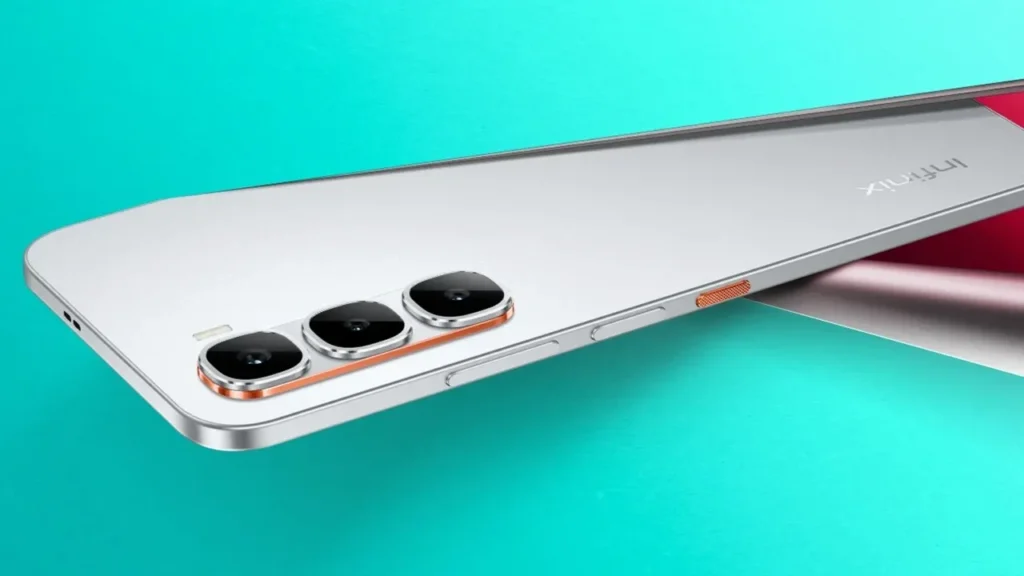
Introduction of Infinix Zero 60 5G
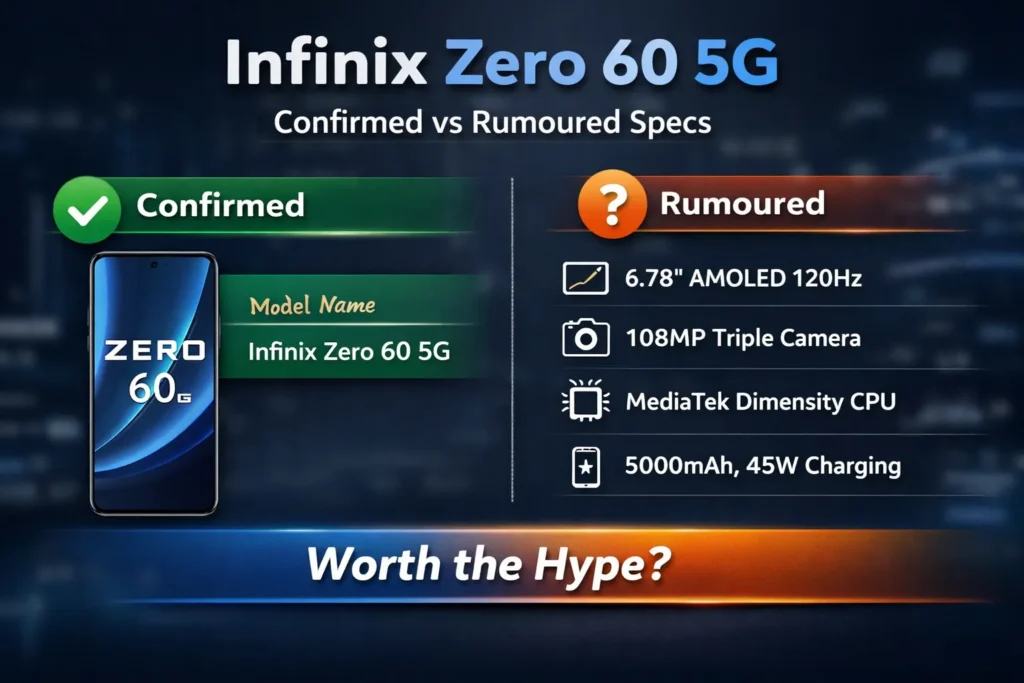
The Infinix Zero 60 5G is expected to be one of the brand’s most interesting mid-range smartphones in 2026. Early reports suggest it could combine a large AMOLED display, a high-resolution main camera, and a substantial battery designed for all-day use. While several specifications are still based on leaks and aggregator listings, the device has already attracted attention from budget-focused buyers looking for strong features at a competitive price. In this comprehensive guide, we separate confirmed details from rumours, analyze the expected hardware, outline real-world testing methods, and explain whether the Infinix Zero 60 5G is worth considering once it officially launches.
Key specs
| Item | Claim | Status |
| Model name | Infinix Zero 60 5G | Confirmed (name) |
| Display | 6.78″, FHD+, AMOLED, 120Hz | Unconfirmed / Rumoured |
| Chipset | MediaTek Dimensity family (reports: 6020 / 7200) | Unconfirmed / Region variant |
| Main camera | 108 MP main (rumour) + ultrawide + macro | Unconfirmed |
| Selfie | ~50 MP (rumour) | Unconfirmed |
| Battery | ~5000 mAh, ~45W charging (rumour) | Unconfirmed |
| RAM / Storage | 8/128, 8/256, up to 12/256 (rumour) | Unconfirmed |
| Software | Android 16 with XOS (expected) | Probable / Pending |
| Price (PK) | PKR ~66,999 (aggregator estimate) | Unconfirmed |
Display & design
What rumours say
- Size & panel: 6.78-inch AMOLED, FHD+ resolution.
- Refresh: 120Hz, likely adaptive.
- Glass & finish: Flat or slightly curved edges, depending on SKU/region.
Why this matters
An AMOLED with 120Hz is a winning combination for contrast, deep blacks, and motion clarity. But real satisfaction depends on peak brightness, color fidelity, refresh policy (adaptive vs fixed), and whether the panel suffers from PWM flicker that annoys sensitive users.
Tests to run at launch
- Peak brightness
- Method: Display an APL (average picture level) full-white screen and record maximum brightness in manual and auto-brightness modes using a calibrated light meter (or validated smartphone lux meter).
- Pass/fail guide: Outdoor legibility needs >600 nits in bright sun; anything below ~450 nits is visibly compromised outdoors.
- Color accuracy
- Method: Run sRGB and DCI-P3 profile tests with a colorimeter and evaluate DeltaE.
- Benchmarks: DeltaE <3 = good; <2 = excellent for color-critical users.
- PWM flicker check
- Method: Use an oscilloscope probe or an app that can detect flicker, and note frequency and duty cycle. Low-frequency PWM (<2000 Hz) can cause discomfort for sensitive people.
- Refresh behavior
- Method: Open several static apps (email, news), then animated content (games), and note whether the refresh rate drops to 60Hz or lower. Verify if the phone uses adaptive scaling aggressively and whether there’s jank when switching.
- Edge & bezel assessment
- Method: Measure usable screen area and test touch response near the edges. Curved glass often looks premium but invites accidental touches and inconsistent palm rejection.
- Screen-on photos & APL
- Method: Take photos of the screen at maximum brightness to evaluate how APL affects brightness and contrast in mixed-content scenarios.
Performance & gaming
The chipset situation
Leakers mention more than one MediaTek Dimensity SKU (e.g., Dimensity 6020 vs Dimensity 7200). These are materially different: one is a light midrange chip tuned for efficiency; the other delivers Substantially higher CPU and GPU throughput. If the Zero 60 ships with Dimensity 7200 in some markets and 6020 in others, label every spec row with the region or SKU.
Benchmarks and hands-on tests
- AnTuTu — synthetic overall score for a quick comparison. Useful but not definitive.
- Geekbench (single/multi) — CPU-focused indicators for raw single-thread and multi-thread behavior.
- GFXBench offscreen — GPU standard for graphics performance comparison.
- Sustained gaming test — 30-minute session in a heavy title (PUBG Mobile / Call of Duty Mobile / Genshin Impact at high settings). Record FPS, thermal hotspots, and throttling percentages.
- App-switching test — load a set of 12 heavy apps and measure reloading time and memory management.
- Thermal imaging/surface thermals — measure how hot the phone gets under load at the back and frame.
What to report
- Peak vs sustained: A high peak score that collapses after a few minutes is worse than a slightly lower but stable sustained profile.
- Thermal throttling: Document at what temperature throttling begins and how performance falls off.
- Real-world gameplay: Average FPS over 30 minutes, frame variance, and whether frame drops are noticeable.
Camera
Rumoured hardware
- Main: 108 MP sensor rumoured (likely uses pixel binning).
- Secondary: ultrawide + macro; OIS/EIS status unknown.
- Selfie: ~50 MP rumoured.
Camera tests to run
- Daylight landscape
- Assess detail retention, dynamic range, and sharpening artifacts. Use 1× and ultrawide captures of the same scene.
- Portrait mode
- Evaluate subject separation, edge detection, natural-looking skin tones, and depth blur artifacts.
- Indoor low-light
- Test without night mode, then with night mode; compare noise control, texture retention, and color accuracy.
- Night mode
- Compare handheld multi-frame stacking against tripod long-exposure where possible.
- Zoom performance
- Take 2×, 4×, and higher crops. If there is no telephoto lens, note the limitations of digital zoom.
- Ultrawide distortion and edge softness
- Check for geometric distortion correction artifacts and softness near the corners.
- Video tests
- 4K@30 stabilization: walk and run sequences to check OIS/EIS.
- 1080p@60 stabilization: test for crop, wobble, or rolling artifacts.
- Selfie checks
- Group selfie for framing, low-light selfie for noise, and video selfie to verify stabilization.
Battery & charging
Rumours
- Battery capacity: ~5000 mAh
- Charging: ~45W wired rumored
Expectations
If the device has 5000 mAh and 45W charging, many modern phones hit ~0→50% in ~20–30 minutes. But real-world behavior often shows slower charging between 50–100%. Report real figures, not manufacturer claims.
Software & updates
What to expect
Historically, the phone will ship with an XOS skin on top of Android. Rumours suggest Android 16; consider this probable pending confirmation.
What to verify at launch
- Android base version and security patch level.
- Update policy — whether Infinix commits to major Android version upgrades and the frequency of security patches. If update support matters to readers, instruct them to wait for official promises.
- Preinstalled apps — list of third-party apps and whether they’re removable. Note any performance or privacy concerns.
- Feature parity — confirm if features like native screen recording, system-wide color profiles, and in-built performance modes are present.
Price, availability & where to buy
Price snapshot idea
Create a price snapshot box that clearly marks whether the price is confirmed or estimated.
| Country | Store | Model / RAM | Price | Last checked |
| Pakistan | Daraz | 8/128 | PKR 66,999 (est) | 2026-03-08 |
| India | Amazon / Flipkart | 8/128 | INR — (update at listing) | Pending |
Retailers to monitor per region
- Pakistan: Daraz
- India: Amazon, Flipkart
- UAE: Noon
- Nigeria: Jumia
- Global: AliExpress (if official listing)
Who competes with the Zero 60 5G
Likely rivals
- Redmi Note series (e.g., Redmi Note 13 variants)
- Realme number series (e.g., Realme 12)
- Samsung Galaxy M-series (value-focused)
How to compare
Create a 3-column comparison: Display | Chipset | Camera | Battery | Price for Zero 60 vs two rivals. When price and SKU are confirmed, populate with concrete numbers so readers can assess value per rupee/dollar.
Rule of thumb: If Zero 60 ships with a capable mid-level Dimensity (e.g., 7200) and undercuts rivals on price, it’s compelling. If the SKU is weaker and the price is close to rivals’, competitors likely win.
Pros & Cons
Pros
- Likely large AMOLED + 120Hz (excellent for media).
- High MP main camera on paper (good for daylight crops).
- Rumoured big battery and reasonably fast wired charging.
Cons
- Core specs (chipset, camera sub-sensor details) are unconfirmed and may vary by market.
- XOS update policy is historically inconsistent; confirm the update promise before buying on that basis.
- Megapixels aren’t a substitute for sensor size and image processing — low-light and video outcomes are uncertain.
Buying advice
Buy on launch if:
- You want a large AMOLED screen immediately for streaming and media.
- You value battery life and a potentially big battery over absolute peak GPU performance.
- The launch price is significantly lower than similarly specced rivals.
Wait if:
- You require guaranteed long-term OS updates and security patches.
- Sustained performance under heavy gaming matters (wait for throttling and thermals tests).
- You care about low-light camera performance and video stabilization — wait for hands-on camera samples.
FAQs
A: As of publishing, there is no confirmed global launch date. Watch the official Infinix channels or verified retailer pages for the announcement.
A: 108MP appears across multiple rumour pages, but it is unconfirmed until Infinix publishes official specs.
A: Reports differ. Rumours mention MediaTek Dimensity chips (different models). Treat this as region-dependent and unconfirmed until Infinix confirms.
A: Expect XOS on top of Android. Confirm the Android base version and Infinix’s update promise on the official product page after launch.
A: That’s rumoured. If true, you should see fast mid-range charging speeds. We will test the charging curve at launch and publish real numbers.
Final verdict
The Infinix Zero 60 5G looks promising on paper: a large AMOLED display, a high-megapixel main camera, and a capacious battery would make it attractive to value-seeking buyers. However, essential specs remain unconfirmed (chipset(s), true camera hardware, official price). For a firm buy recommendation, we need: confirmed chipset per region, verified hands-on camera samples, sustained performance numbers, and official retail pricing. Publish now with clear Confirmed vs Rumoured labels and update immediately when official specs and hands-on tests arrive.
