
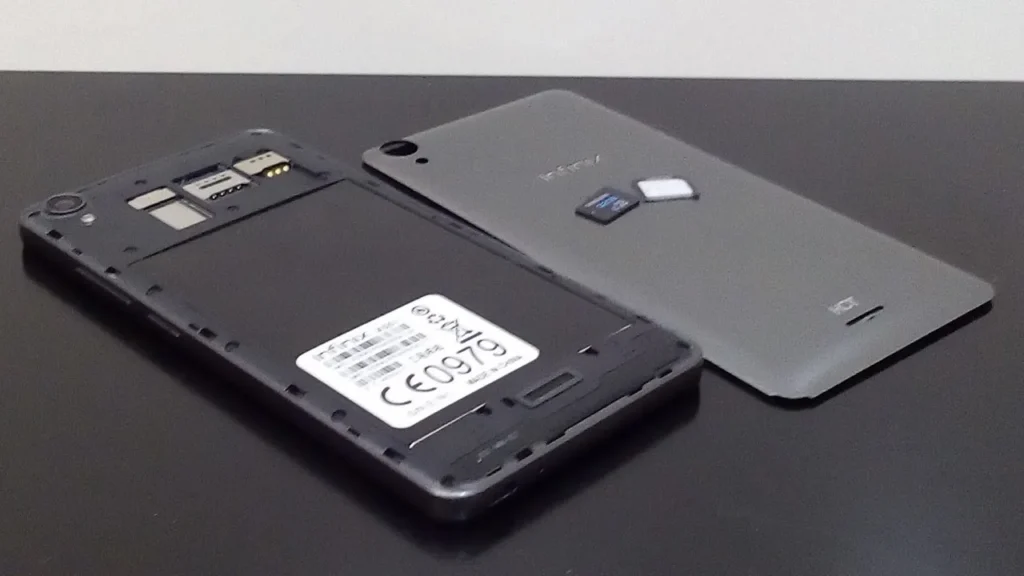
Introduction of Infinix X551
The Infinix X551 is designed for users who want strong everyday performance, reliable battery life, and modern smartphone features without paying flagship prices. Positioned in the budget-to-midrange segment, this device combines a large display, capable hardware, and practical software tools that make daily tasks smooth and convenient. Whether you use your phone for social media, streaming videos, casual gaming, or photography, the Infinix X551 aims to deliver balanced performance and long-lasting power. In this comprehensive guide, we explore its full specifications, real-world performance tests, camera capabilities, battery endurance, and practical buying advice to help you decide if it’s the right smartphone for you.
Key specifications
| Feature | Typical spec |
| Model | Infinix X551 |
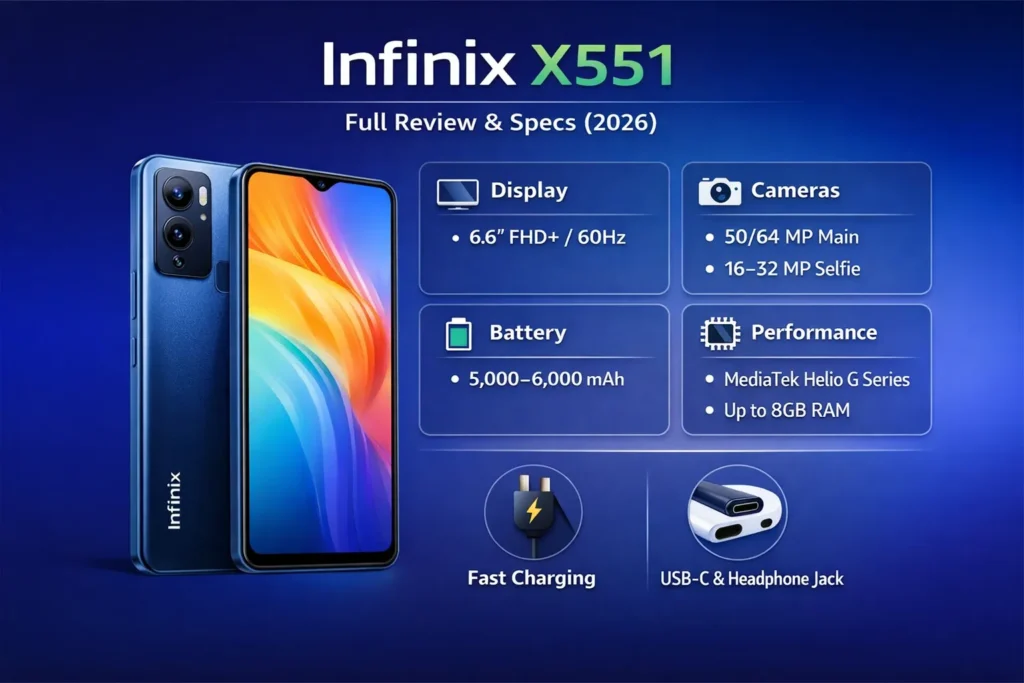
| Display | ~6.6″ FHD+ (1080 × 2400), IPS / AMOLED variant |
| Refresh rate | 60 Hz (90 Hz variant possible) |
| SoC | Mid-range MediaTek Helio G / Dimensity family (varies by SKU) |
| CPU | Octa-core (performance + efficiency clusters) |
| GPU | Mali / IMG series |
| RAM | 4 / 6 / 8 GB |
| Storage | 64 / 128 GB (microSD expansion in many SKUs) |
| Main camera | 50 MP or 64 MP (depends on region) |
| Ultra-wide | 8 MP (optional) |
| Aux sensors | 2 MP macro/depth (common) |
| Front camera | 16–32 MP |
| Battery | 5,000–6,000 mAh |
| Charging | 18W–33W wired fast charge (varies) |
| OS | Android with XOS skin |
| Biometrics | Side-mounted fingerprint or under-display (SKU dependent) |
| Ports | USB-C, 3.5 mm jack (some SKUs) |
| Colors | Midnight Black, Ocean Blue, Pearl White (region variants) |
| Typical price | Budget / mid-range bracket (varies by country) |
Design & build
The Infinix X551 mixes a plastic frame with a glass-like glossy (or textured polycarbonate) back to deliver a premium look without premium manufacturing costs. The design language aims for clean lines, reasonably thin bezels, and practical button placement.
Detailed points
- Size & weight: Balanced for single-hand use; not bulky for a 5,000–6,000 mAh battery.
- Materials: Plastic frame, glossy or textured back. Expect a “soft” flex profile and no metal cold feel — but better shock tolerance for drops.
- Buttons & ports: Power and volume on the right, SIM tray typically left-side, USB-C at the bottom, and some SKUs retain the 3.5 mm jack.
- Fingerprint: Side-mounted reader or optical under-display on select SKUs; confirm before purchase.
- Colors & finishes: Regional variations — show swatches on the product page.
- Why this matters: For everyday users, a mid-range handset that looks premium but is tough enough for daily wear is a big usability win. Emphasize real photos (gloss + textured options) so buyers know how the finish behaves in sunlight and with fingerprints.
Display
What buyers should expect
The screen is a primary decision lever. The Infinix X551 typically ships with a ~6.6″ FHD+ panel that balances sharpness and battery efficiency. Some higher SKUs might offer AMOLED panels; most base models use high-quality IPS LCDs.
Typical screen specs
- Size: ~6.6 inches
- Type: IPS LCD (AMOLED on higher SKU)
- Resolution: 1080 × 2400 px (FHD+)
- PPI: ~400–410
- Refresh rate: 60 Hz (90 Hz variant exists)
- Peak brightness: 450–600 nits (typical)
- Protection: Tempered glass / Gorilla Glass variant (region dependent)
A simple display test you can run
- Set brightness to 50% indoors and 100% in bright sunlight, and Judge Readability.
- Open a plain white page to check for backlight uniformity and clouding.
- Play a 1080p video to evaluate motion handling and perceived sharpness.
- Check saturation by viewing images with strong reds/blues — note oversaturation or flatness.
Performance & chipset
Everyday performance
The device uses a mid-range SoC from MediaTek (Helio G-series or entry-level Dimensity). Expect smooth everyday interactions, reliable app switching for 6GB variants, and playable light-to-moderate gaming performance. High-end 3D titles will require reduced graphics settings.
Typical chipset & memory options
- SoC family: MediaTek Helio G / Dimensity (region & SKU dependent)
- CPU: Octa-core (big.LITTLE-like mix)
- GPU: Mali or IMG
- RAM: 4 / 6 / 8 GB
- Storage: 64 / 128 GB (UFS for higher SKUs; eMMC on budget SKUs)
Real-world notes
- Multitasking: 6GB is the practical minimum for comfortable switching; 4GB may be tight.
- Storage speed: UFS yields faster app installs and loading; eMMC can bottleneck. Confirm the SKU’s storage type.
- Thermals: Expect warmth during extended gaming; occasional short-term thermal throttling is normal for mid-range SoCs.
Memory, storage & ports
What to check before buying
- RAM & storage combination: Opt for 6/128 GB if budget permits — better for long-term usability.
- Expandable storage: If you shoot lots of photos or videos, confirm microSD support.
- USB port: USB-C is standard; confirm PD support and cable/wattage in the box.
- Audio: Retained 3.5 mm jack is handy — verify this for your SKU.
Camera system
Camera overview
- Main sensor: 50MP or 64MP (region dependent) with f/1.6–f/1.8 aperture.
- Ultra-wide: 8MP on some SKUs.
- Macro/depth: 2MP auxiliary sensors (common) — mainly for marketing depth, often low utility.
- Selfie: 16–32MP frontal camera.
- Video: Up to 1080p@30/60; 4K is rare on base SKUs.
How to test the camera
- Daylight test: Shoot outdoors at noon in auto mode. Compare color, dynamic range, and detail.
- Indoor test: Take photos under warm tungsten/LED lighting. Check color cast and noise.
- Low-light test: Photograph the same scene after dark at constant framing. Note exposure and grain.
- Night mode: If available, shoot HDR/night mode and compare to auto.
- Selfie test: Take portrait and regular selfies. Judge color, skin tones, and edge detection.
- Video test: Record a 30-second walking clip to check stabilization and audio capture.
Camera sample checklist
- Full-resolution images with visible EXIF.
- 100% crops for sharpness comparison.
- A/B photos vs two competitors in identical light.
- Short video sample (link) with resolution and bitrate details.
Practical note: Many mid-range phones rely on software post-processing. Evaluate whether the camera’s software favors oversharpening, aggressive noise reduction, or artificial saturation — and call that out with crops.
Battery life & charging tests
Typical battery specs
- Capacity: 5,000–6,000 mAh (common for long endurance).
- Charging: 18W–33W wired fast-charge (varies).
- Reverse charge: Some SKUs support reverse charging; check the spec sheet.
Repeatable battery test protocol
- Video loop test: Set brightness to 120 nits (or ~50% if you lack a lux meter), Wi-Fi on, signed into one account, airplane mode off. Run a 1080p H.264 video on loop until shutdown. Record hours.
- Mixed-use SOT: Use the phone normally across a day (calls, social apps, browsing) and measure screen-on time (SOT) — 7–10 hours is a reasonable expectation for 5,000 mAh on IPS.
- Charging test: From 0→30%, 0→50%, 0→80%, and 0→100% times recorded with the included charger. Note wattage and thermal behavior.
What to expect
- Video loop: 20–30+ hours on 5,000–6,000 mAh with an IPS panel.
- Mixed use: 7–10 hours SOT for average users; heavy gaming reduces endurance.
- Charging: 18–33W will charge the device reasonably, but not as fast as 65W/120W flagships.
Software, updates & support
The Infinix X551 ships with XOS (Infinix’s Android skin). XOS Offers Features and customizations, as well as some preinstalled apps.
What to check
- Android version at launch and the latest official update (including build number & release date).
- Update policy: How frequent are OS and security updates for this SKU/region? Document vendor history.
- Bloatware: List preinstalled apps and show how to disable/uninstall where possible.
Recommended tweaks for better UX
- Disable auto-start for unused apps.
- Use a lightweight launcher for a near-stock feel.
- Turn on dark mode (if AMOLED) to save battery and reduce eye strain.
Comparisons & alternatives
| Phone | Display | SoC | RAM | Battery | Camera | Why pick it |
| Infinix X551 | 6.6″ FHD+ | Mid-range SoC | 6/128 GB | 5,000 mAh | 50MP main | Best battery for price |
| Competitor A | 6.5″ FHD+ | Similar SoC | 6/128 GB | 4,500 mAh | 48MP | Lower price, smaller battery |
| Competitor B | 6.4″ AMOLED | Slightly faster SoC | 8/128 GB | 4,500 mAh | 64MP | Better display, slightly costlier |
Who should buy the Infinix X551?
- Users who want long battery life.
- People who use the phone for social media, video streaming, and photography in daylight.
- Budget-conscious buyers who want modern ports and a large display.
Who should not buy it?
- Those who prioritize flagship-level night photography.
- Users need top-tier CPU power for sustained 3D gaming.
Buying guide
Buyer checklist
- Confirm SKU: Regional SKUs can change RAM, storage, cameras, and network bands.
- Warranty & retailer policy: Official store vs grey-market differences.
- Charger & wattage: Confirm the included charger’s wattage; many budget boxes include a lower-wattage brick.
- Software update history: Review the vendor’s recent update cadence for your region.
- Regulatory approval: In markets like Pakistan, check PTA approval for network activation.
Best value tips
- Buy the 6/128 GB variant when possible.
- Compare official stores and verified retailers for warranty.
- Wait for seasonal discounts to maximize value.
FAQs
A: Price varies by country and retailer.
A: Many SKUs include a 3.5mm jack, but this can vary.
A: With a 5000–6000 mAh battery, expect a full day or more of mixed use. Video looping or light use can last much longer.
A: Casual and mid-range gaming is fine. Heavy 3D gaming will run, but may need lower graphics settings and will heat the phone.
A: Daylight photos are good. Low-light photos are okay with noise; night mode helps, but don’t expect flagship quality.
Final verdict
The Infinix X551 is a smart buy for anyone who wants a big battery, solid day-to-day performance, and strong value. If camera night shots and ultra-fast charging are your top priorities, look at slightly pricier models. For most users — students, social media consumers, video watchers, and general productivity users — the Infinix X551 covers the essentials without breaking the bank.
